Built 1936
BMW 328 85001
Whereabouts unknown
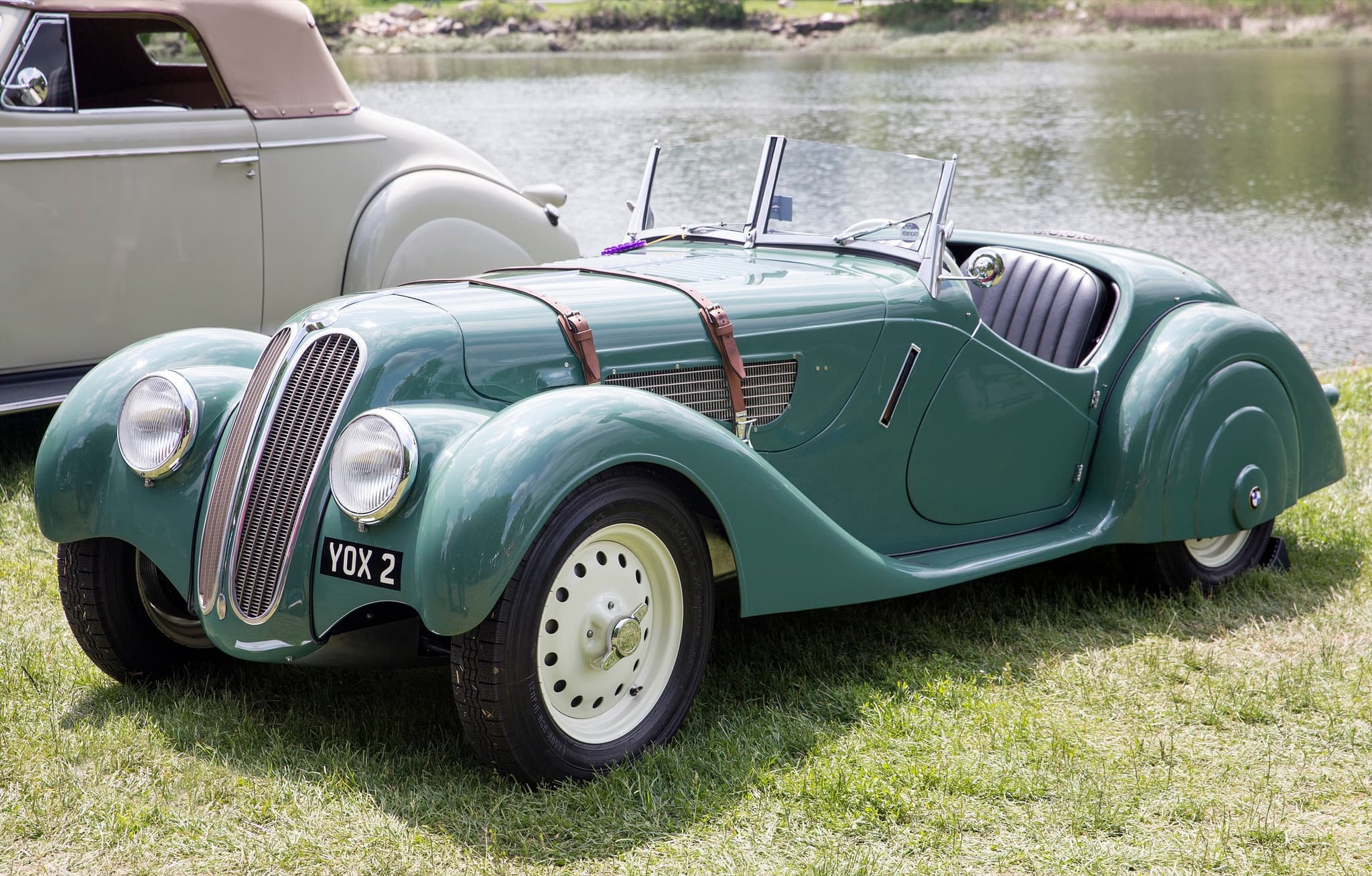
BMW's six-cylinder sports car of 1936–40: built at Eisenach, a winner in its first race and outright winner of the 1940 Mille Miglia, sold in Britain as the Frazer Nash-BMW 328, and the source of the six that powered Bristol's first cars.
A green 328 roadster with the standard body at the Greenwich Concours d'Elegance, Connecticut, on 1 June 2025.Mr.choppers, CC BY-SA 4.0
On Sunday 14 June 1936 Ernst Henne, BMW's motorcycle record-breaker, took a white two-seater with no doors to the Eifelrennen at the Nürburgring and won the unsupercharged two-litre sports-car race. The car was chassis 85001, the first of three prototypes, and this was the BMW 328's first appearance anywhere. BMW says the debut went unannounced in the press, and that the race was run in rain and mist.
With all the top-brass of BMW present Henne did not dissappoint them, and the new prototype sports car had a fairy-tale win on the prestigious 14-mile Nurburgring. Thus was born the BMW Type 328.
The history follows the car from that afternoon to the end of its production and beyond.source 1source 2source 3source 4source 5
The 328 grew out of BMW's sports roadsters of 1934, the 315/1 and 319/1, and kept their layout: a stiff frame of two steel tubes, independent front suspension by a transverse leaf spring and wishbones, and a live rear axle on leaf springs. Its engine was the 326 saloon's (sedan's) six-cylinder block under a new aluminium head by Rudolf Schleicher, with inclined valves, hemispherical combustion chambers and short cross pushrods, fed by three downdraught carburettors; Fritz Fiedler designed the chassis. BMW credits its body engineer Wilhelm Kaiser with the production body, drawn from the prototypes and given doors, a folding vee windscreen (windshield) and a spare wheel set into the tail.
The car was built at Eisenach, in Thuringia. Series production began in the spring of 1937, and BMW says the first customers had their cars in late April that year. Denis Jenkinson dated the end of production to August 1939, when the war turned BMW to other work; BMW's own records run the model to 1940. The number built is in the figures below, and the specifications give every reading, the price new among them.source 6source 5source 4source 7
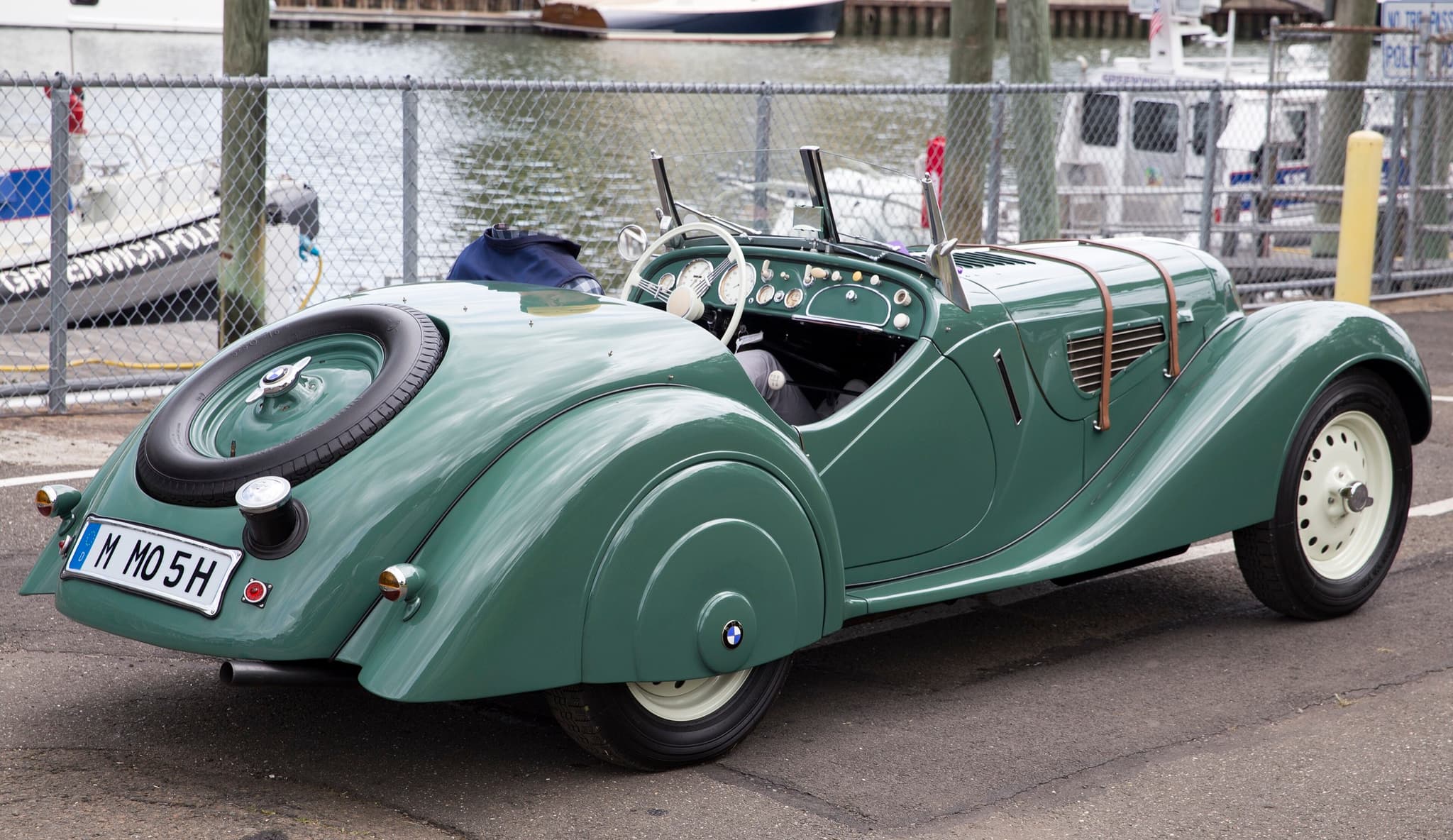
Most 328s were open two-seaters with BMW's standard body: the roadster. BMW's archive record lists bodies by coachbuilders too, among them Wendler's cabriolets and two closed streamliners drawn by Koenig-Fachsenfeld. In Britain, AFN Ltd of Isleworth imported the car with right-hand drive and sold it as the Frazer Nash-BMW 328. For racing, BMW built the Mille Miglia cars: the works roadsters of 1938, the streamlined roadsters of 1940 and the Kamm coupé. Carrozzeria Touring of Milan built the body of the Touring coupé for Le Mans in 1939.
The line-up below sets the versions side by side, and BMW 328 Versions adds the other coupés and the cars related to the 328.source 7source 8source 9source 4source 10
The 328 raced before it was sold, and it won often. At the Tourist Trophy at Ards in September 1936, a handicap race won outright by a Riley, three 328s took the first three places in the two-litre class and the team prize. Le Mans in 1937 went badly: all three cars retired, two of them in an accident on the eighth lap in which Pat Fairfield, one of their drivers, was killed. In April 1938 A. F. P. Fane, AFN's driver, won the two-litre class of the Mille Miglia in one of BMW's works cars, entered in Frazer Nash's name, and that July three works cars finished the Spa 24 Hours 3rd, 4th and 5th overall, side by side across the line. At Le Mans in 1939 the Touring coupé finished 5th overall and won the two-litre class, with two roadsters 7th and 9th.
On 28 April 1940, on a closed road circuit from Brescia, Huschke von Hanstein and Walter Bäumer won the Mille Miglia outright in the Touring coupé. BMWs were also 3rd, 5th and 6th, and took the team prize. Every season is told on BMW 328 Racing History.source 1source 11source 12source 13source 14source 15source 16source 17source 18
The engine outlived the car. In 1945 H. J. Aldington of AFN, by then working with the Bristol Aeroplane Company, went to Munich more than once and brought back BMW drawings, engines and one of the 1940 Mille Miglia roadsters. Bristol's own historians have its first engine on the 328's pattern running in May 1946, and the Bristol six that grew from it powered every Bristol from the 400 to the 406, and the post-war Frazer Nashes. Fritz Fiedler joined AFN in 1947 and was lent to Bristol as a consultant on the 400.
In Germany the cars raced on. On 11 May 1947, at Hockenheim, Karl Kling won the two-litre sports-car race in the Kamm coupé, entered by Ernst Loof, whom BMW names as the director of its racing division until early 1941. BMW 328 Engine follows the six from Munich to Bristol and beyond.source 19source 8source 20source 21source 10
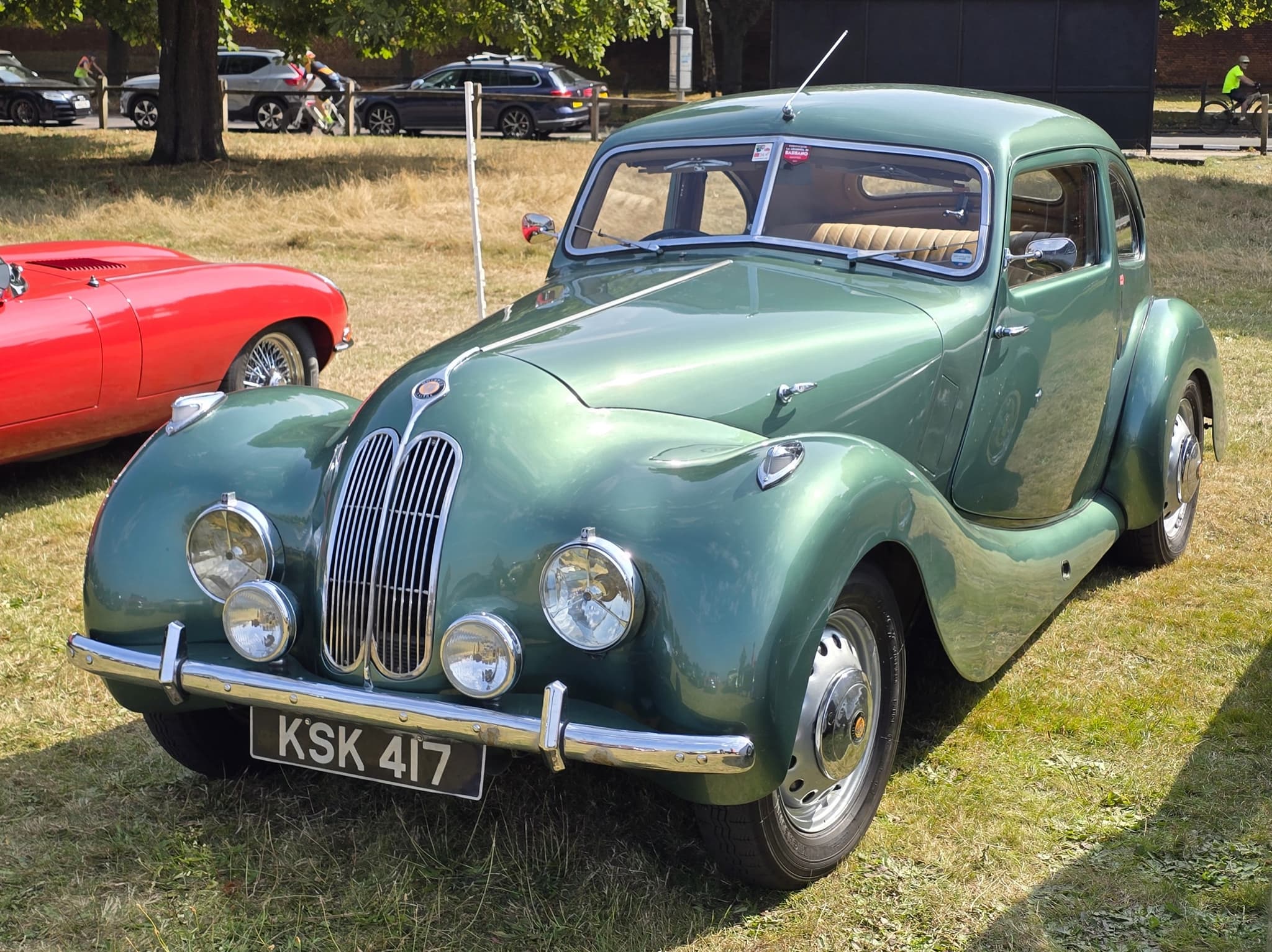
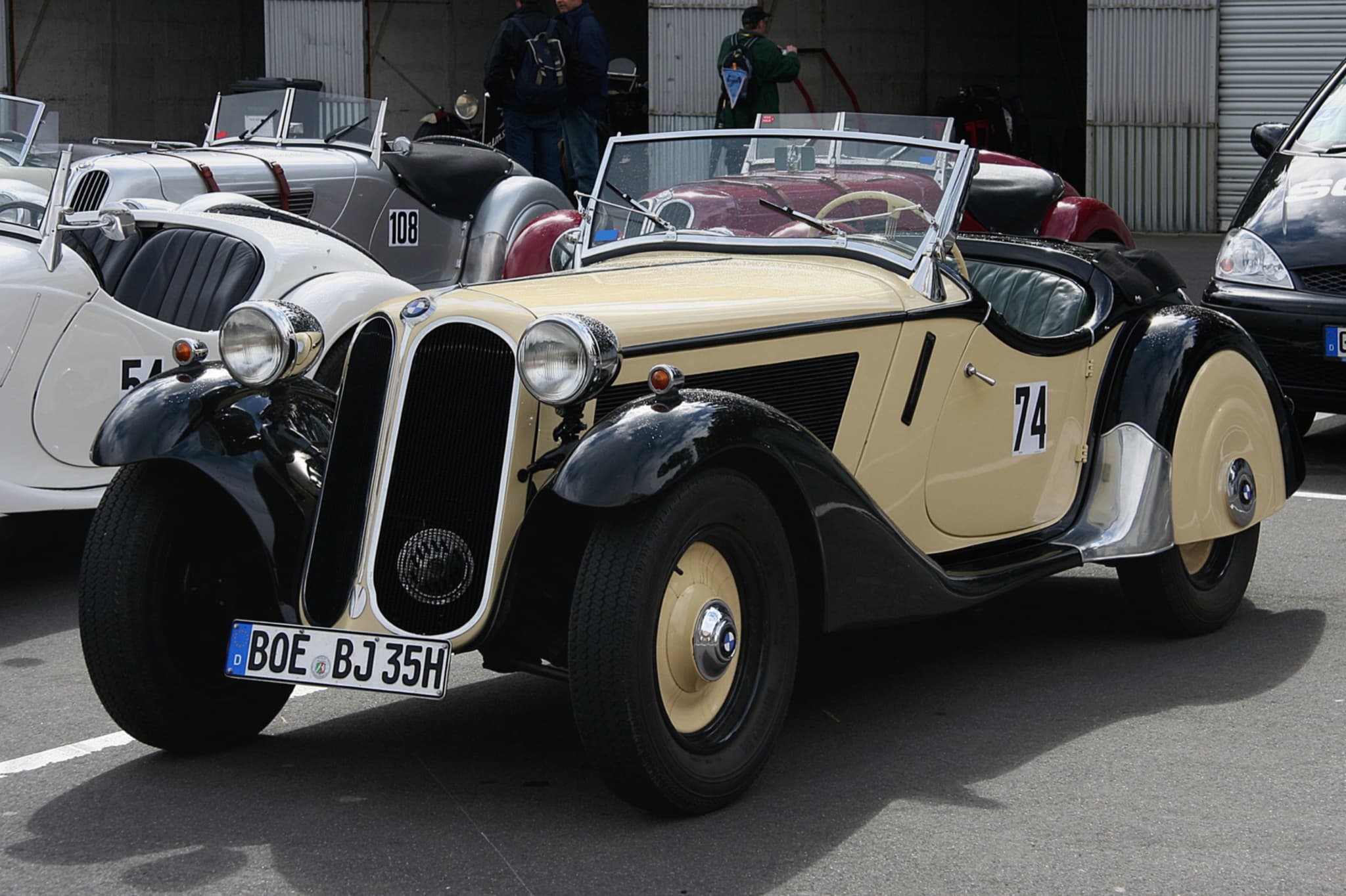
The 315/1 and the 319/1, which BMW built in small numbers from 1934, gave the 328 its layout. After the 328, BMW built no two-seater sports car until the 507 of 1955; in Britain its heirs were the Bristol 400 and the post-war Frazer Nash, through the engine. The history tells both lines.
In Britain, by Motor Sport's lists of 1937 and 1938, the Frazer Nash-BMW 328 cost more than the SS 100, the HRG and the Triumph Dolomite, and less than the Aston Martin Speed Model and the Alfa Romeo 6C 2300 B. On the track its class rivals were Adler's streamlined saloons and the Aston Martins: an Adler took the two-litre class at Le Mans in 1937 and an Aston Martin at the 1938 Tourist Trophy, but the 328s beat the Adlers at Spa in 1938 and the Aston Martin at Le Mans in 1939.
Britain had the car under its own name and badge, with right-hand drive, and at least one British body: a two-colour Bertelli coupé at the 1936 London Motor Show. Elsewhere, by BMW's factory records as the Simeone museum cites them, a 1937 roadster went to the Dutch BMW importer in Rotterdam in February 1938, and privately run 328s raced in the Netherlands, Belgium, Switzerland, Romania and Finland.
BMW quotes the German papers praising Henne's first win. In Britain Motor Sport reported in October 1937 that the Frazer Nash-BMW had a high reputation among British enthusiasts, and its verdicts are gathered in the history.source 6source 19source 22source 23source 1source 16source 9source 24source 25source 3source 4
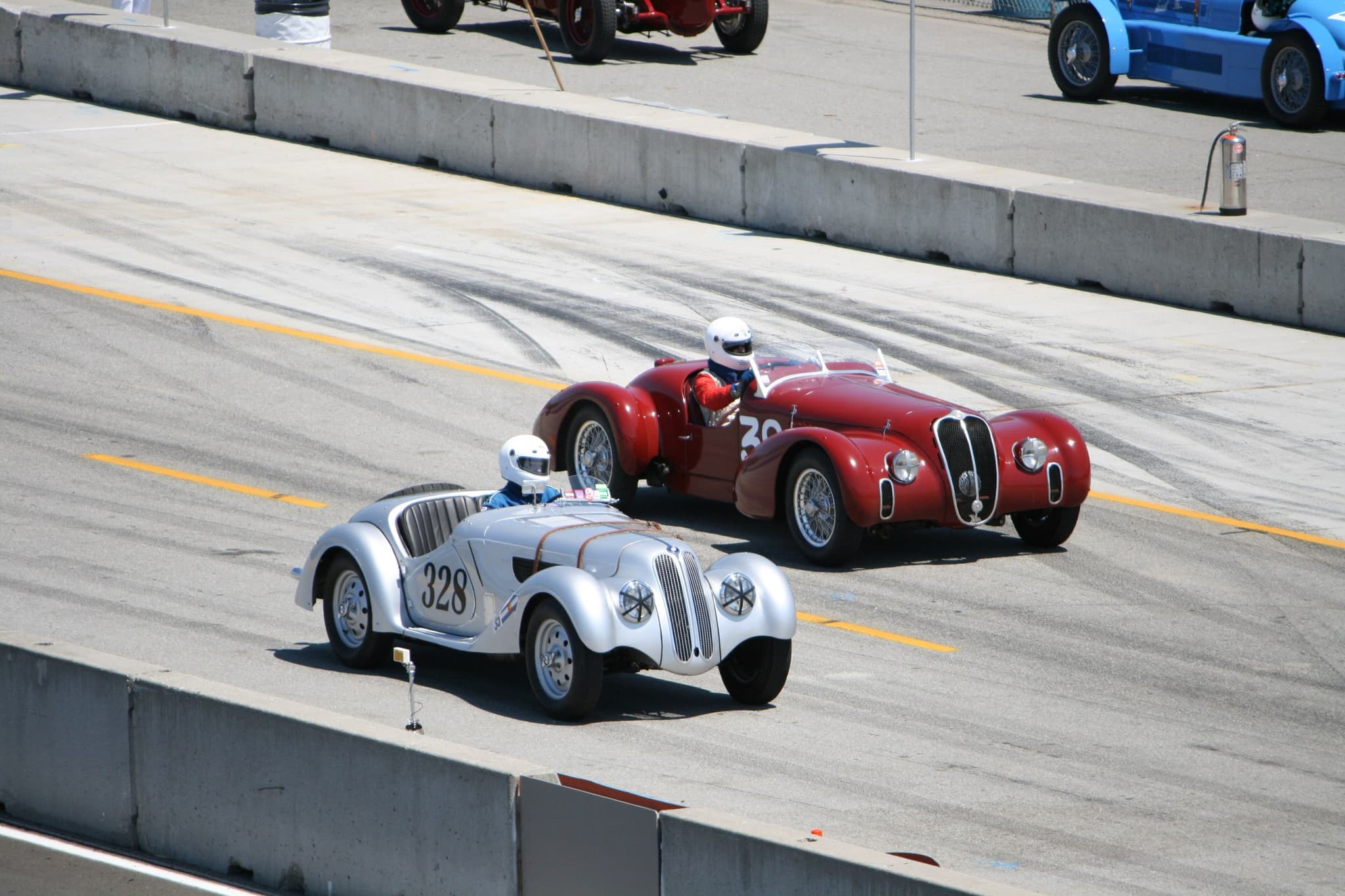
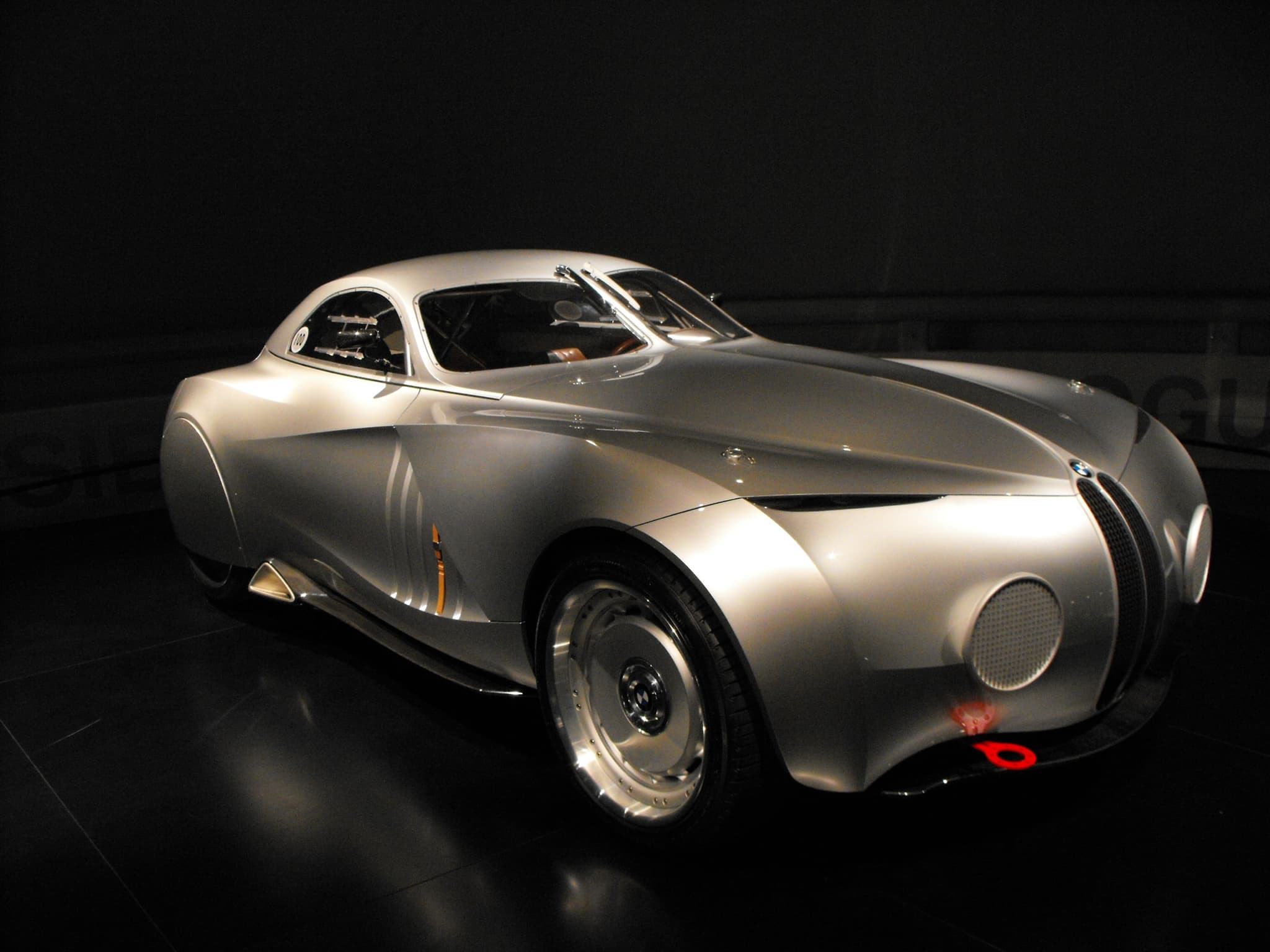
BMW has honoured the 328 with two concept cars and a reconstruction. In 2006 it showed the Concept Coupé Mille Miglia, a tribute to the Touring coupé, at the Mille Miglia in Brescia. In 2010 BMW Classic built a reconstruction of the Kamm coupé, whose original had been scrapped after an accident in the early 1950s. For the 75th anniversary in 2011 came the BMW 328 Hommage, unveiled at the Concorso d'Eleganza Villa d'Este and bodied largely in exposed carbon-fibre-reinforced plastic.source 26source 27source 28
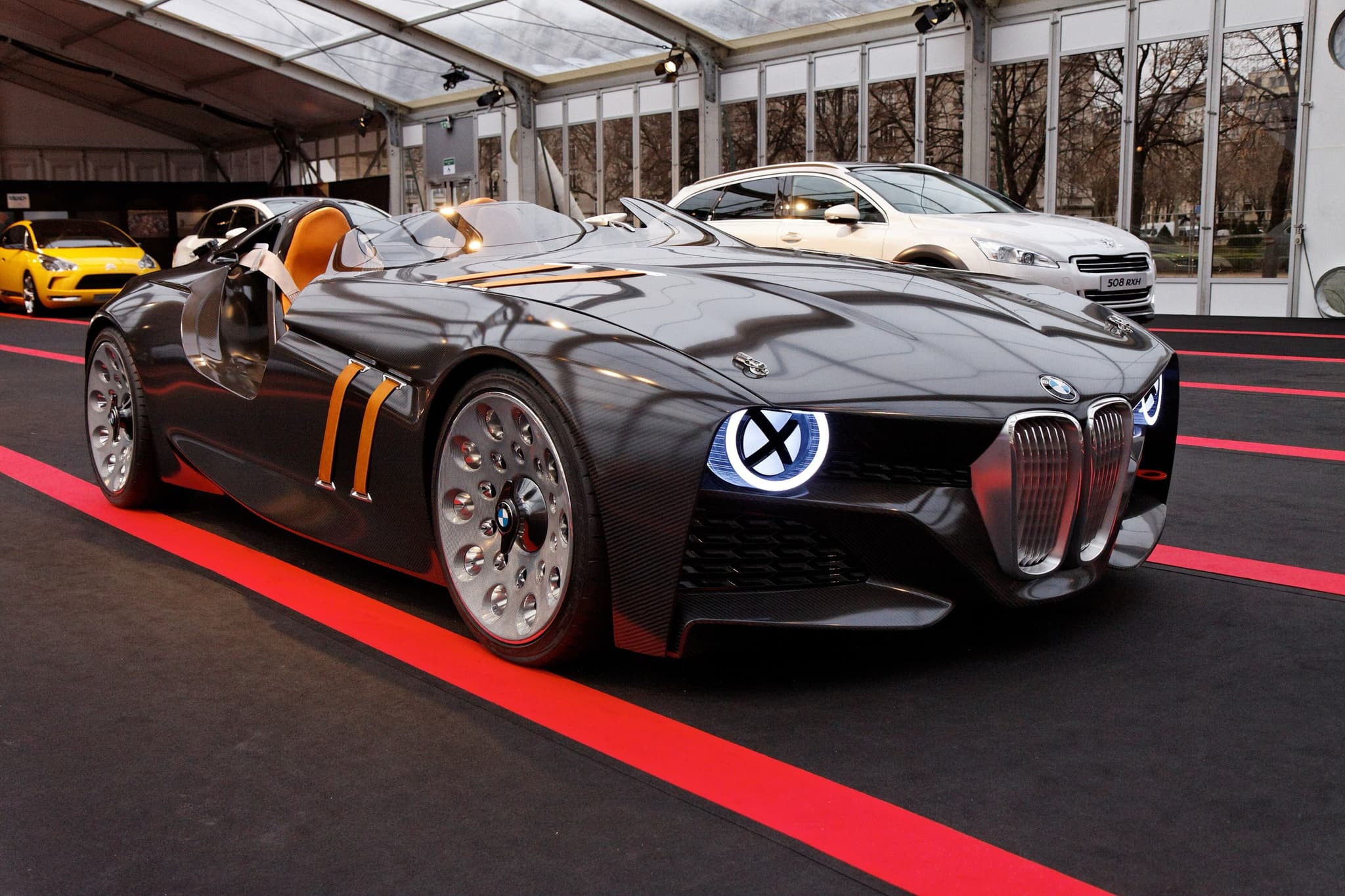
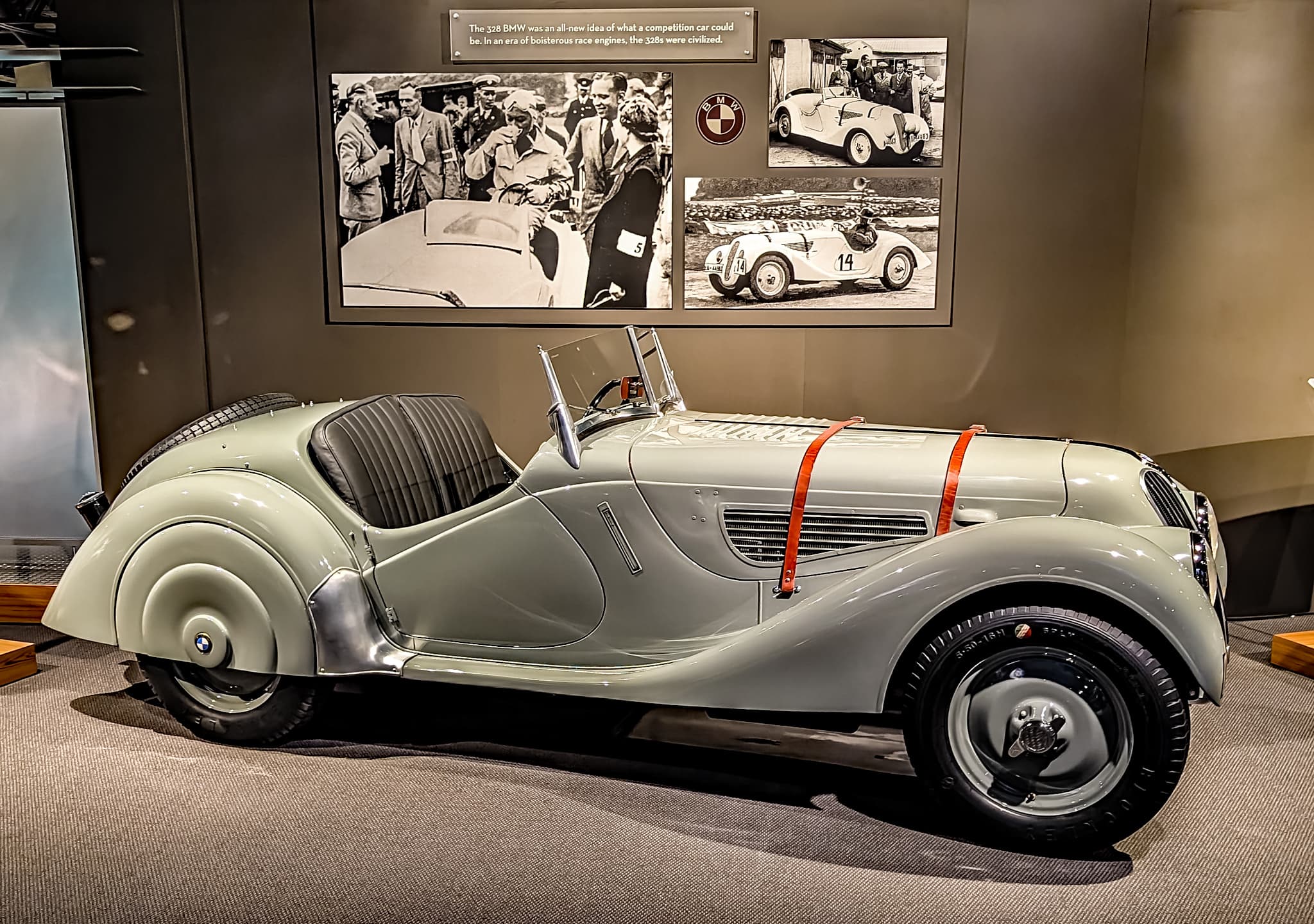
BMW's own estimates of how many survive are on the roadster page. Of the British cars, the Frazer Nash Archives count all but two as surviving. BMW keeps the Touring coupé, which it acquired in 2002, and a 1940 Mille Miglia roadster in its collection in Munich, and road cars stand in museums, the Simeone Foundation's 1937 roadster in Philadelphia among them, still unrestored.
In May 2026, the car's 90th year, the Concorso d'Eleganza Villa d'Este gave Best of Show to the "Bügelfalte" (chassis 85032), the roadster BMW rebodied in Munich in the autumn of 1939 on the chassis of the 1938 Mille Miglia class winner.source 8source 10source 29source 25source 4source 3source 30
Sources for Versions
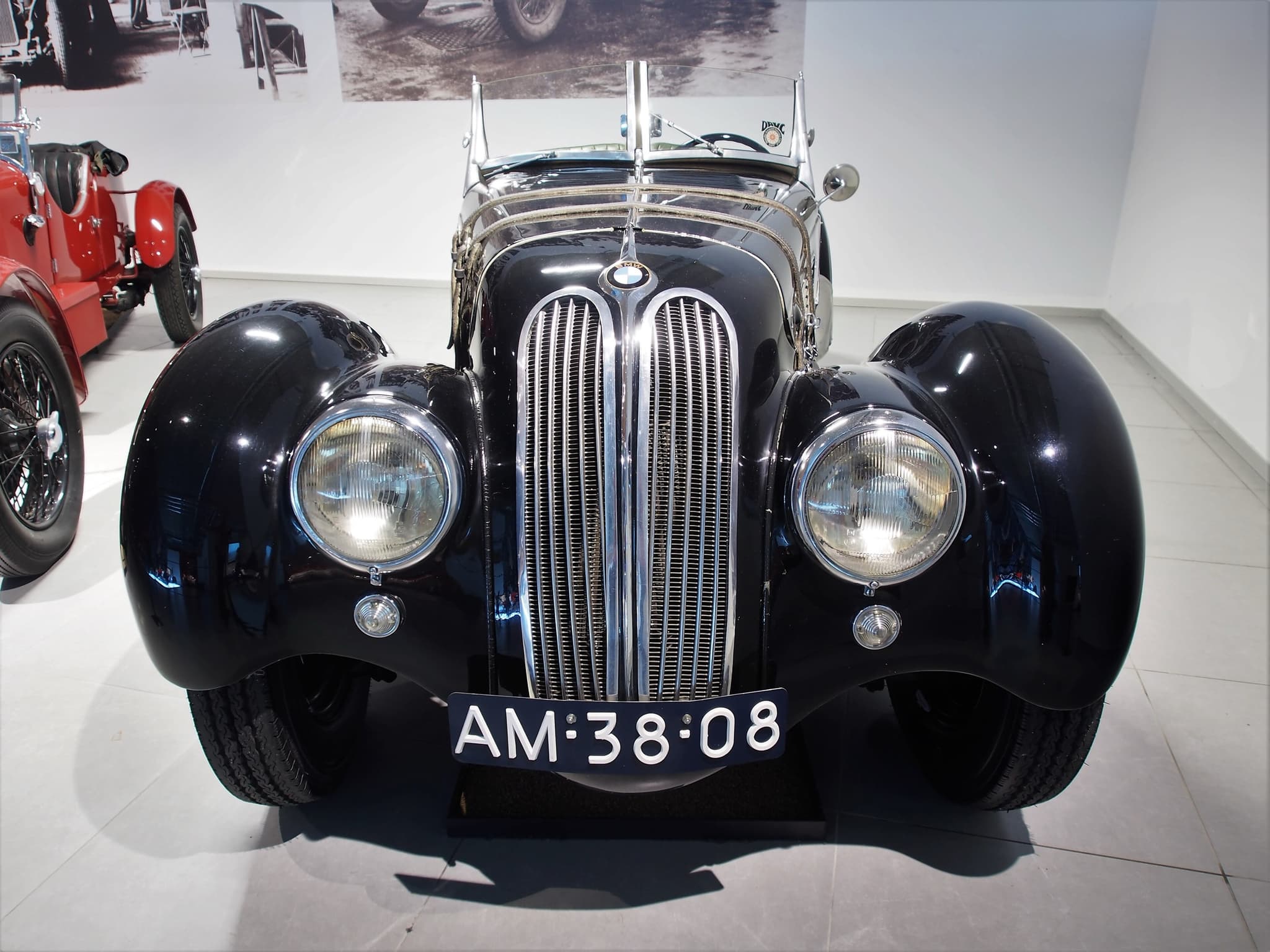
1936–1940 · 1,971 cc
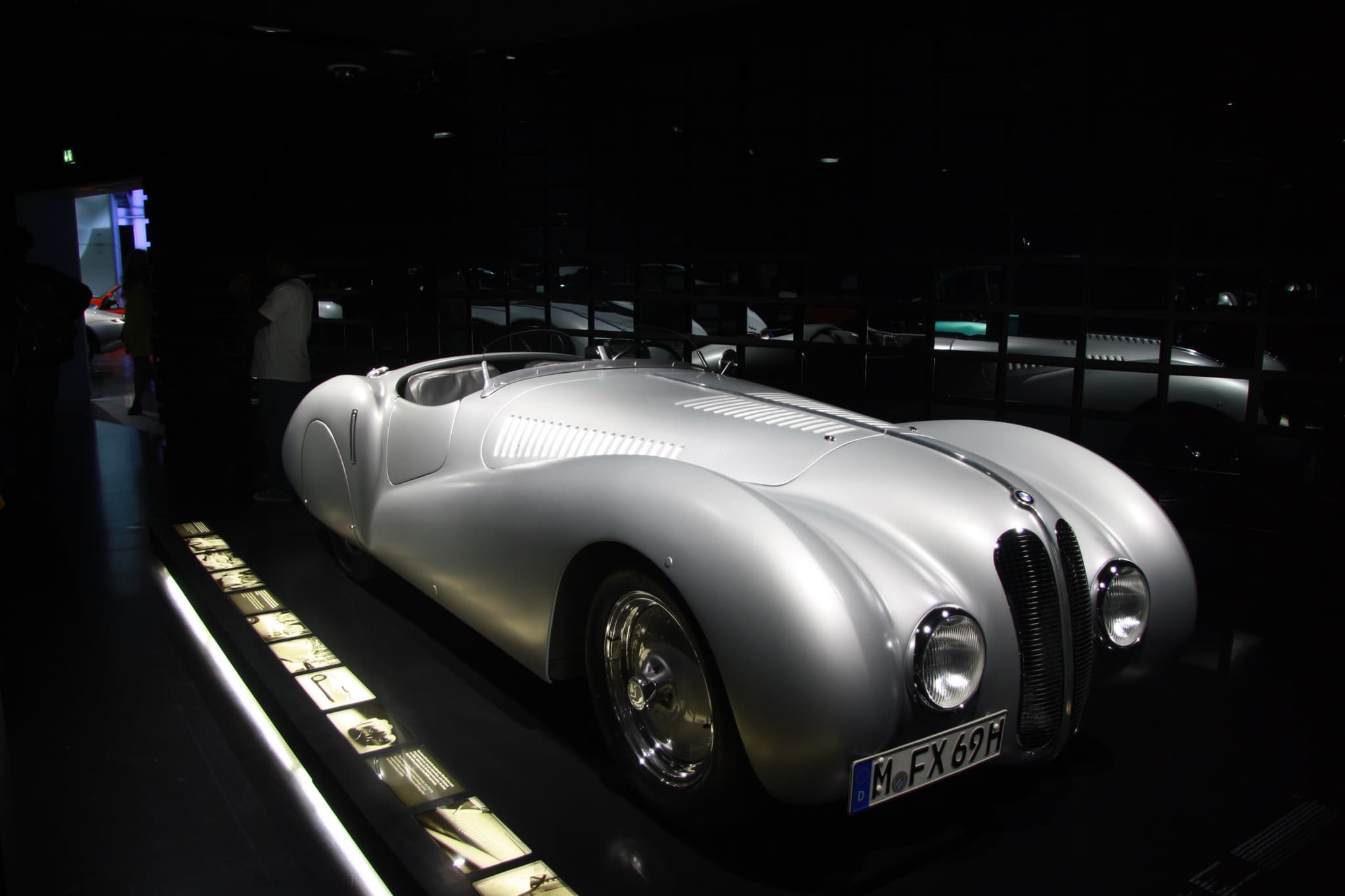
1939–1940
3 built
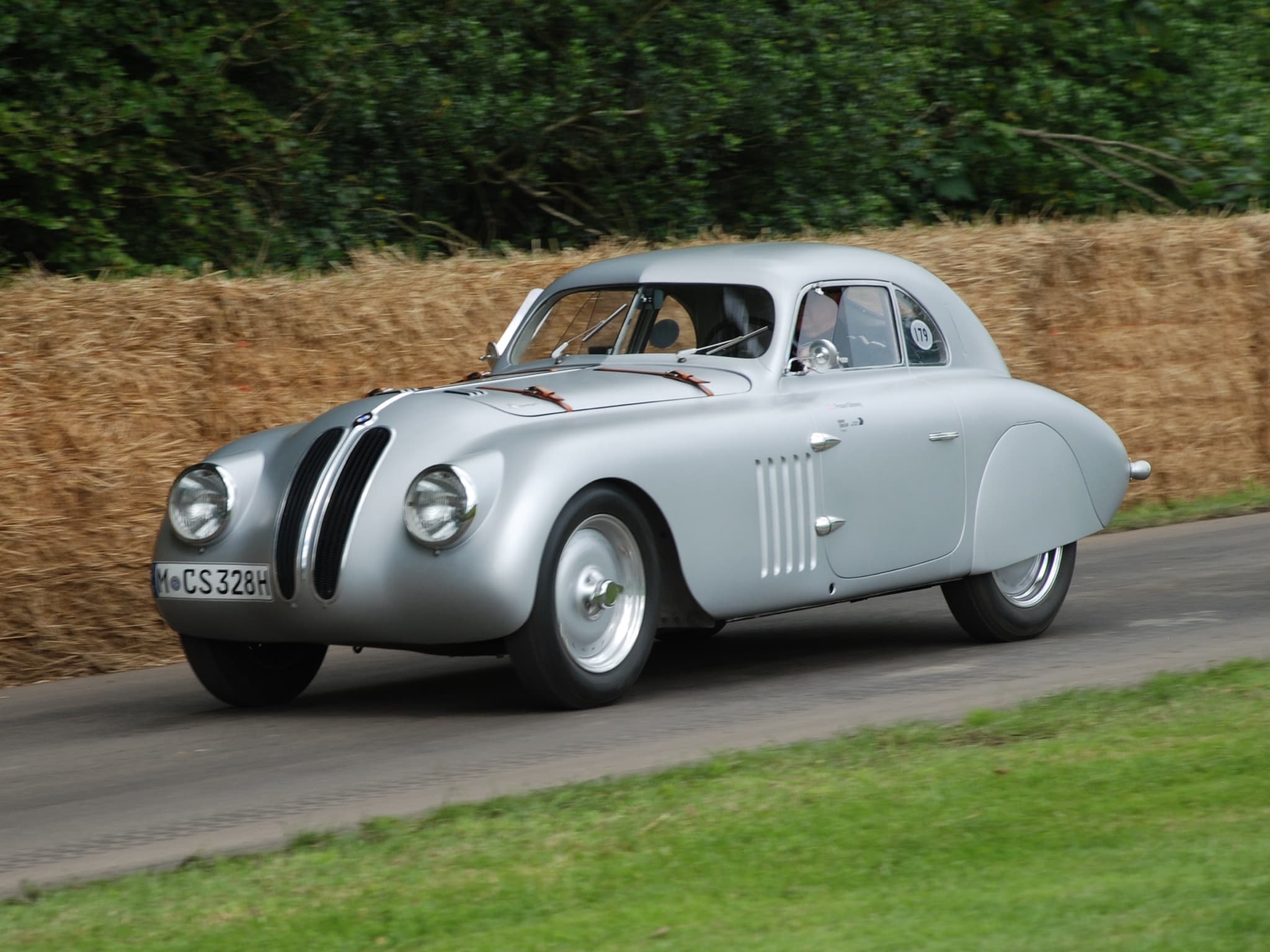
1939–1939 · 1,971 cc
1 built
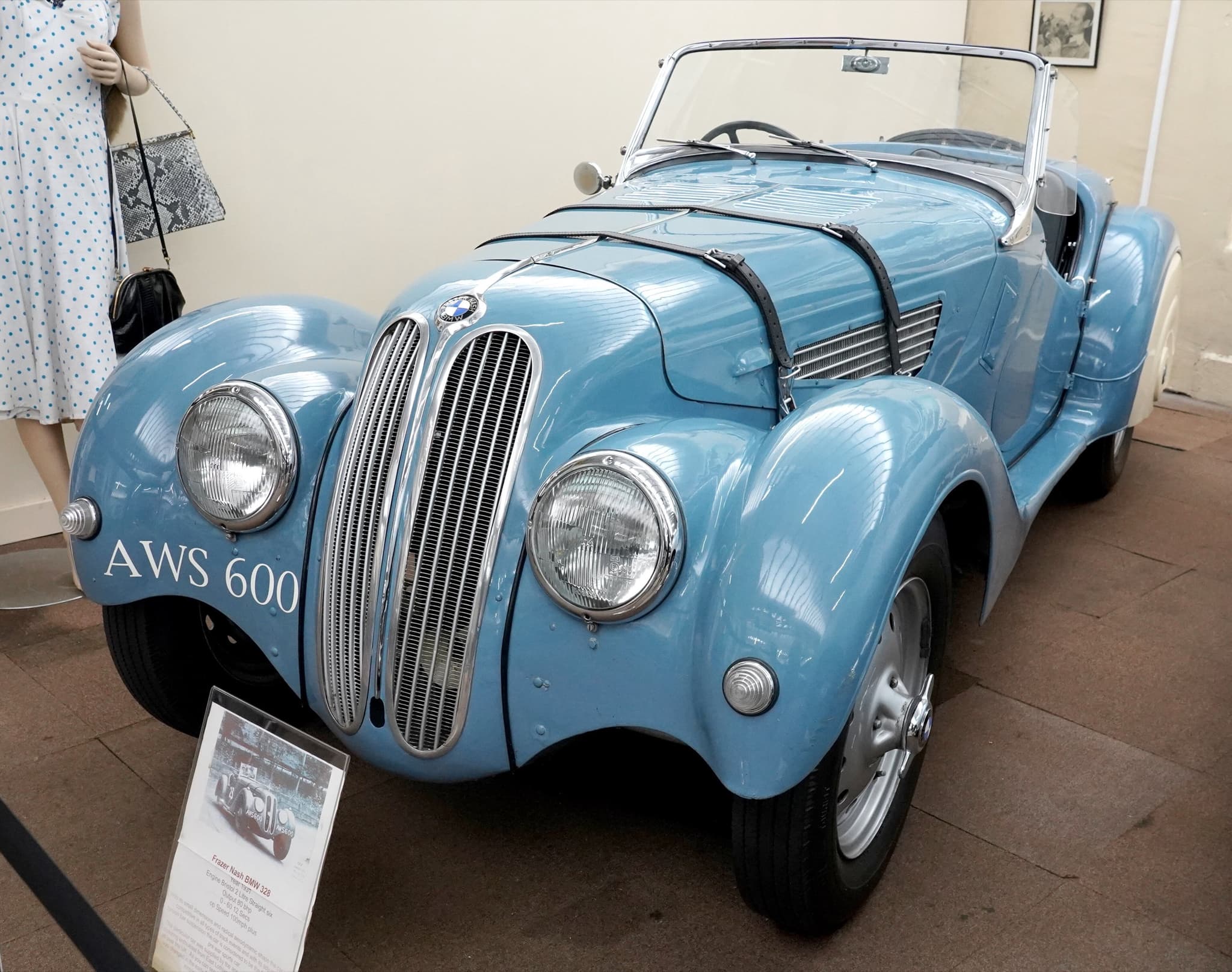
1937–1939 · 1,971 cc
48 built · 52
Pictures, top to bottom: Alf van Beem, Public domain (PD-self); Jiří Sedláček, CC BY-SA 4.0; Matthew Lamb, CC BY-SA 2.0; Steve Knight, CC BY 4.0.
Built 1936
Whereabouts unknown
Built 1936
Whereabouts unknown
Built 1936
Whereabouts unknown
Whereabouts unknown
Survives
Whereabouts unknown
Built 1939
Survives
Whereabouts unknown
Whereabouts unknown
Built 1941
Survives
Built 1939
Destroyed
Built 1937
Survives
driver
Managing director of AFN Ltd, the Frazer Nash company at Isleworth, which sold BMWs in Britain as Frazer Nash-BMWs, and a driver of the works 328s in 1936–37.
driver
Seventh in the 1936 Tourist Trophy and third overall, winning the 2-litre class, in the 1937 Tourist Trophy, both in works 328s run by AFN.
driver
A works driver: fifth at Spa in 1938, ninth at Le Mans in 1939 and fifth in the 1940 Mille Miglia.
driver
A works driver: fourth at Spa in 1938 and third in the 1940 Mille Miglia.
driver
Co-driver of the Touring coupé that won the 1940 Mille Miglia; BMW says the team management kept him in the passenger seat.
driver
Co-drove the Kamm coupé with Count Giovanni Lurani in the 1940 Mille Miglia; it retired.
Drove one of the four works 328s entered by AFN in the 1937 Tourist Trophy at Donington; it retired with a broken transmission.
Co-drove David Murray's Frazer Nash-BMW 328 at Le Mans in 1937, and died in the multiple accident on the eighth lap.
driver
AFN's driver, third in the 1936 Tourist Trophy and winner of the 2-litre class of the 1938 Mille Miglia in one of BMW's works cars; he was killed flying on active service with the RAF in 1942.
chassis engineer
The engineer who designed the 328's chassis, the tubular frame BMW patented; after the war he joined AFN in Britain and was loaned to Bristol for its Type 400. Back at BMW, its board gave him charge of the first 507 prototype in March 1954 (Bimmer, reporting Karlheinz Lange's research), and he was head of its design department by 1955.
driver
Winner of the 1940 Mille Miglia with Walter Bäumer in the Touring coupé; he later led Porsche's racing team.
driver
A works driver: fourth at Spa in 1938 and seventh at Le Mans in 1939.
driver
BMW's record-breaking motorcyclist, whose 279.5 km/h of 1937 stood until 1951, and who drove the 328 to its first win on 14 June 1936.
Co-drove with Heinrich von der Mühle-Eckart to twelfth in the 1938 Mille Miglia.
Rode with A. F. P. Fane in the 1938 Mille Miglia, when Fane, driving the whole race himself, won the 2-litre class and finished eighth overall.
body designer
The body specialist who, by BMW's account, drew the 328's production body from the hand-built prototypes.
aerodynamicist
Professor at Stuttgart and founder of its automotive research institute, who patented a streamlined body with a cut-off tail in 1936; BMW says its Kamm coupé followed his wind-tunnel specifications.
driver
Won the 2-litre sports-car race at Hockenheim on 11 May 1947 in the Kamm coupé, entered by Ernst Loof: by BMW's account the car's only race win.
director of racing, owner
BMW's director of racing, by BMW's account, until the racing division was disbanded early in 1941; after the war he had the Kamm coupé for his own use, and entered it for Karl Kling's win at Hockenheim in 1947. He later headed BMW's development branch at the Nürburgring, his former Veritas works, where he built the first 507 prototype in 1954.
driver
Count Giovanni "Johnny" Lurani, who drove a works 328 to tenth in the 1938 Mille Miglia and the Kamm coupé in 1940; by his obituary he ran the Mille Miglia nine times.
body designer
The stylist under whom, by BMW's account, the Kamm coupé's body was made in 1939 and the 1940 Mille Miglia roadsters were designed.
Entered and co-drove a Frazer Nash-BMW 328 at Le Mans in 1937 with Pat Fairfield; it was eliminated in the multiple accident on the eighth lap.
Twelfth in the 1938 Mille Miglia in a works 328 with Holtzschuh, fourth in the 2-litre class.
driver
Won the 1948 Australian Grand Prix, a Formula Libre handicap at Point Cook, in a BMW 328.
driver
A Munich racing driver who, by BMW's account, tested the 1940 roadster on the autobahns outside Munich, and was fifth in that year's Mille Miglia with Willi Briem.
driver
A works driver: third at Spa in 1938, seventh at Le Mans in 1939 and third in the 1940 Mille Miglia.
Drove a works 328 at Le Mans in 1937 with Uli Richter; it was eliminated in the multiple accident on the eighth lap, which Roth escaped.
driver
Fifth at Le Mans in 1939 with Hans Wencher in the Touring coupé, winning the 2-litre class; BMW calls him the NSKK team's leading driver.
engine designer
BMW's technical director for motorcycles and cars from 1934, who designed its six-cylinder engines from 1932 and the 328's cylinder head.
driver
A works co-driver: fifth at Spa in 1938 and ninth at Le Mans in 1939 with Willi Briem, and sixth in the 1940 Mille Miglia with Hans Wencher.
driver
Fifth at Le Mans in 1939 with Prince Max zu Schaumburg-Lippe in the Touring coupé, and sixth in the 1940 Mille Miglia in the Bügelfalte.
Co-drove with Uli Richter to eleventh in the 1938 Mille Miglia, third in the 2-litre class.
Every source the site cites is on the sources page.