BMW 328 Mille Miglia
The 328s BMW raced in Italy's thousand-mile race: the works roadsters that took the first four places of their class in 1938, and the five special cars of 1940, three faired roadsters (one of them the Bügelfalte) and two coupés, the Touring that won outright and the Kamm that did not finish. Also searched as the BMW 328 MM.
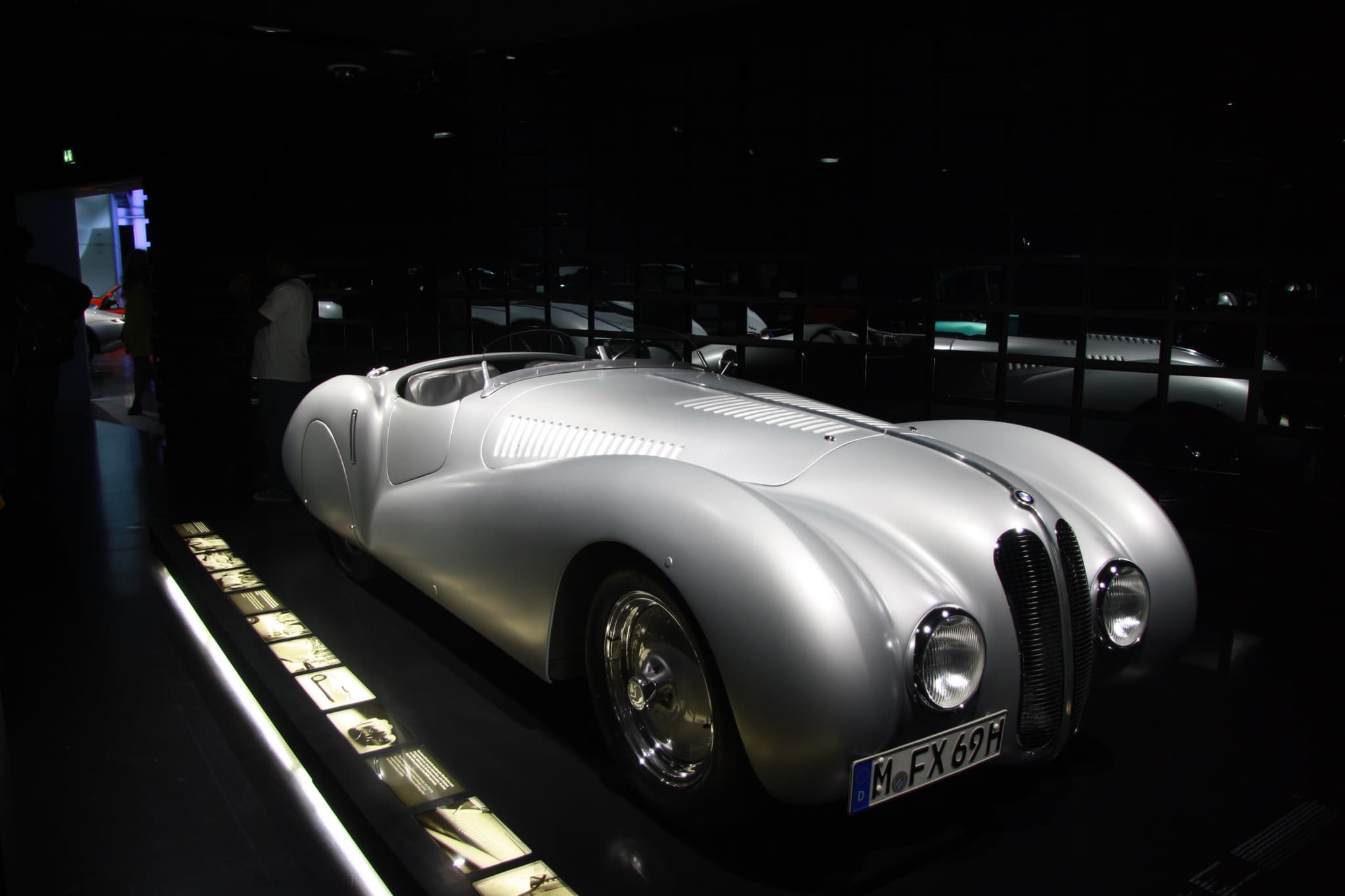
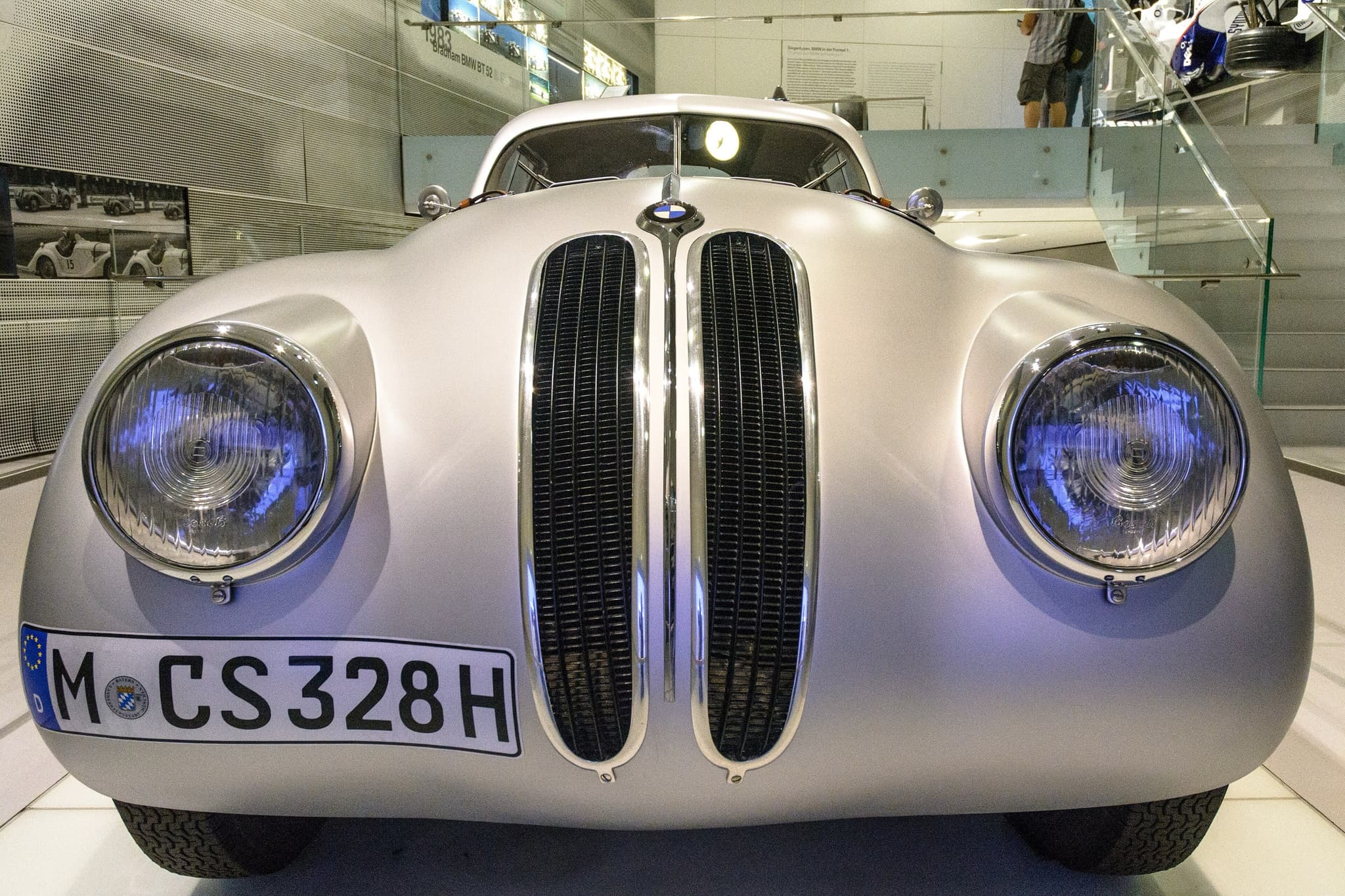
At 6.40 on the morning of 28 April 1940, by BMW's account, Huschke von Hanstein was waved away from Brescia in the Touring coupé, a closed BMW 328 with a body by Carrozzeria Touring of Milan. Nine laps of a triangle of public roads later, he and Walter Bäumer had won the Mille Miglia outright, with three of BMW's special roadsters 3rd, 5th and 6th behind them. Two years earlier, on the old road route to Rome and back, standard-bodied works 328s had taken the first four places in the two-litre class. For the second race BMW ran five special cars. After the war the winner turned up in the United States and the Kamm coupé on a scrap heap; BMW has since acquired the one and reconstructed the other.source 1source 2source 3source 4
The Mille Miglia, and why it mattered to BMW
The Mille Miglia was Italy's road race from Brescia to Rome and back. In 1938 it ran to some 1,630 km (about 1,010 miles), on a route changed that year to use more autostrada and a coastal detour between Florence and Rome. It was Alfa Romeo's race: Motor Sport called it "an established 'picnic' for the official Alfa-Romeo team". BMW's own history of 2011 says what a result there was worth:
Success in the Mille Miglia was proof of a company's competitiveness not only on the racing stage but also in automotive construction in general.
1938: the two-litre class
The 1938 race started at 2 a.m. on 3 April, the cars sent away from Brescia at one-minute intervals. Four works 328s ran in the two-litre class, three entered by BMW and one in the name of Frazer Nash, BMW's British importer, and Motor Sport reported that the whole team had made a practice lap of the route beforehand:
| No. | Crew | Entrant | Result |
|---|---|---|---|
| 113 | A. F. P. Fane, W. James | Frazer Nash | 8th, 1st in class |
| 108 | Prince Max zu Schaumburg-Lippe, Count Giovanni Lurani | BMW | 10th, 2nd in class |
| 109 | Uli Richter, Fritz Werneck | BMW | 11th, 3rd in class |
| 114 | Heinrich Graf von der Mühle-Eckart, Theodor Holtzschuh | BMW | 12th, 4th in class |
A. F. P. Fane, AFN's driver, won the two-litre class in one of BMW's works cars, entered in Frazer Nash's name. He had meant to drive his own 328, Motor Sport explained, but "was given … place and car in the official works team", and he drove the whole race himself, with James beside him, at an average of about 119 km/h (74 mph). Racingsportscars' records give his car chassis number 85032. Ahead of all four BMWs, Biondetti and Stefani won for Alfa Romeo in an 8C 2900B; only one other car finished among the 328s, Cortese and Fumagalli's Alfa Romeo 6C 2300B, in 9th place.
The only British driver in the race was A. F. P. Fane, and he drove in masterly fashion to win the 2-litre class for the German B.M.W. team.
BMW adds that the team won the team prize "for consistency" and the award for the best foreign entrant, and calls the result its "international breakthrough in European motor sport".
It was the last race on the old road route before the war. On the fast first stage a Lancia Aprilia skidded as it entered Bologna and ran into the spectators at the roadside. Motor Sport reported nine people killed, three of them children, and at least 20 injured. No BMW was involved.source 3source 5source 6source 1
1940: the Gran Premio Brescia delle Mille Miglia
Motor Sport reported in May 1939 that, after several accidents in which spectators died, "it was decided by the R.A.C.I. to drop the famous Mille Miglia". In 1939 a road race from Tobruk to Tripoli, in Italy's colony of Libya, stood in for it, and the 328s won their class there too. The race came back to Brescia on 28 April 1940 in a new form, as the 1st Gran Premio Brescia delle Mille Miglia: nine laps of a triangle of public roads closed to traffic, from Brescia to Cremona and Mantua and back, about 165 km (103 miles) a lap. Racingsportscars gives the whole race as 1,491.9 km, BMW as a little more. Motor Sport, which called it the Brescia Grand Prix, described "a road circuit, despite its long straight-aways, one of which runs for as much as 18 miles". It was open to unsupercharged sports cars of up to three litres.
Alfa Romeo's works team brought its new 6C 2500 SS; two Delages ran; and two small Auto Avio Costruzioni 815s, the first cars Enzo Ferrari built, both retired. BMW sent five cars, all in the two-litre class:
| No. | Car | Crew | Chassis | Result |
|---|---|---|---|---|
| 70 | Touring coupé | Huschke von Hanstein, Walter Bäumer | 85368 | 1st |
| 74 | Roadster | Adolf Brudes, Ralph Roese | 85464 | 3rd |
| 72 | Roadster | Willi Briem, Uli Richter | 85463 | 5th |
| 71 | Roadster, the Bügelfalte | Hans Wencher, Scholtz | 85032 | 6th |
| 73 | Kamm coupé | Count Giovanni Lurani, Franco Cortese | 85287 (queried) | Retired |
The two closed BMWs led from the start, BMW says. Von Hanstein drove nine-tenths of the race (Motor Sport, 1940) and stopped shortly before the finish to let Bäumer take the car over the line (BMW, 2020). They won in 8 hours 54 minutes 46.6 seconds, at 166.69 km/h (103.59 mph), and von Hanstein set the fastest lap at 174.1 km/h (108.18 mph). Giuseppe Farina and Mambelli, in the best of the Alfa Romeos, came in more than a quarter of an hour later. Brudes and Roese were 3rd, ahead of Biondetti and Stefani's Alfa; Briem and Richter were 5th and Wencher and Scholtz 6th, and with the winners the three roadsters took the team prize. Motor Sport judged that the winner "quite outclassed the new 2.5-litre six-cylinder Alfa-Romeos": the best Alfa lap, it noted, did not equal the BMW's average for the whole race.
It was the second Mille Miglia won by a car from outside Italy, nine years after Rudolf Caracciola's Mercedes-Benz, whose crew had won, as Motor Sport wrote in 1931, "for the first time in the history of the event … on a foreign car". BMW has called the 1940 speed a record never equalled, though it was set on a closed circuit with long straights; on racingsportscars' figures none of the 11 winners from 1947 to 1957, all back on the full road route, averaged as much, Stirling Moss and Denis Jenkinson's Mercedes-Benz of 1955 included.source 7source 4source 2source 1source 8source 9source 10source 3source 11
The 1940 roadsters
The three roadsters came from BMW's new styling department in Munich, "Künstlerische Gestaltung", set up on 1 September 1938; BMW places it under Fritz Fiedler and lists the Mille Miglia Roadster among the cars it designed, with models tested in the wind tunnel at Stuttgart. The first car was built on a chassis that had already won.
In autumn 1939 a space frame was attached to the standard chassis of the Mille Miglia class winner from the previous year and covered with a thin aluminium skin.
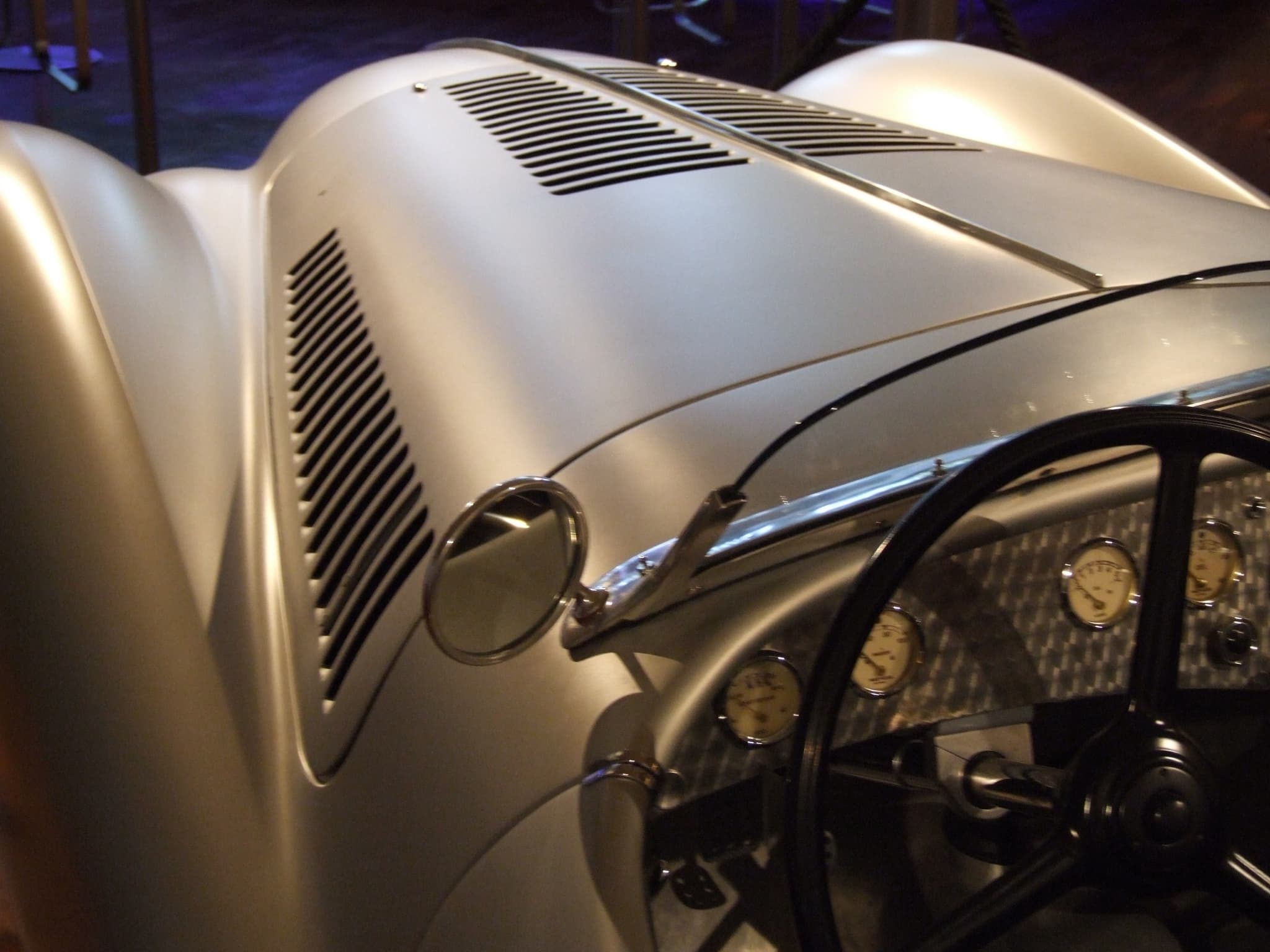
The prominent edging of its front wings (fenders) gave it its nickname, the Bügelfalte, or trouser crease. Racingsportscars' records give the same chassis number, 85032, to Fane's class winner of 1938 and to Wencher and Scholtz's roadster of 1940. Uli Richter, BMW says, took the finished car out in icy weather for high-speed runs on the autobahns outside Munich.
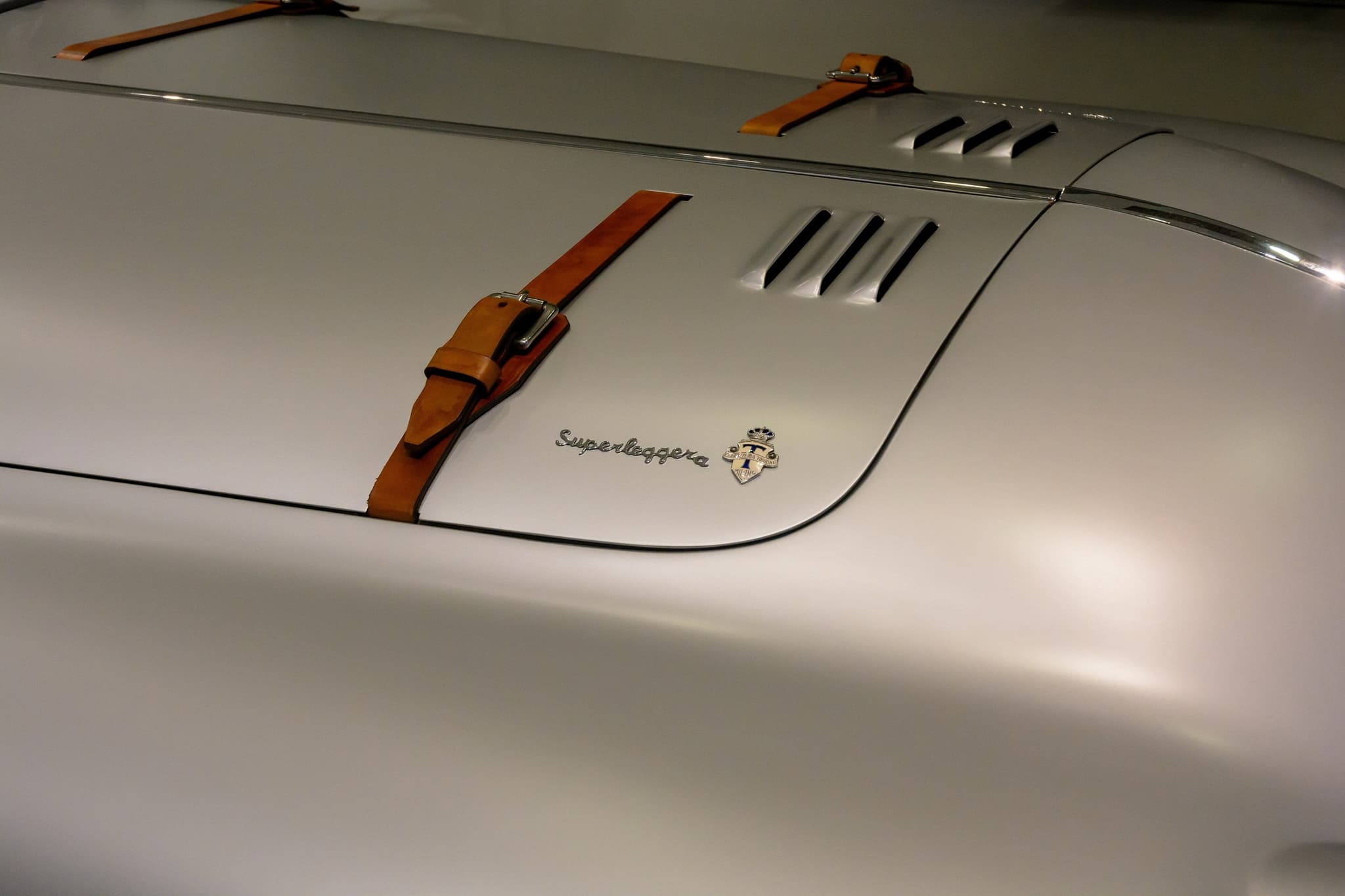
Space frames for two more cars were already mounted on their chassis, but the body shop in Munich was short of men, so the two half-finished cars went to Touring in Milan, which skinned them "according to BMW designs", in the words of BMW's data sheet. In 2026 BMW called the Bügelfalte "The only special roadster produced at the Munich plant". The Kamm coupé's body, BMW said in 2011, was made in Munich too. Motor Sport saw open cars with "modified engines and newly-faired bodies". BMW says the race engines of 1940 had reinforced crankshafts with nine counterweights and better valve gear, which let them rev higher; its own texts give the roadsters two different outputs, and the specification shows both.
BMW Classic also keeps a later Touring roadster of the same family. Its data sheet says the German sporting authority, the ONS, had Touring fit three 328 roadsters with aerodynamic bodies for a race on the autobahns from Berlin to Rome, planned for 1941 and stopped by the war; its car has a chassis of 1937 and a body of 1941, and it is in the register of notable cars.source 1source 12source 13source 6source 4source 14
How much did the 1940 roadsters weigh?
Fact check
700 kg
BMW Classic (BMW Group PressClub Global), "BMW 328 Mille Miglia Roadster" (data sheet), 11 May 2011, data sheetsource 12
11.8 cwt
Motor Sport, "The Brescia Grand Prix", Jun 1940, p. 18, p. 18, the reportsource 4
Our reading. BMW's figure comes from its data sheet of 2011, for the car it presents as Briem and Richter's; Motor Sport's is the magazine's report of the race, for "the open B.M.W.". Neither says what was in the car when it was weighed, so both stand.source 12source 4
The Touring coupé, in brief
The winning coupé had raced before. BMW had tried a closed body of its own in 1938 and, by its account, been disappointed, so its racing department went to Touring, which had built a similar body for Alfa Romeo. Touring's coupé, chassis 85368, finished 5th at Le Mans in June 1939 and won the two-litre class there. Its story, from Le Mans to the American officers of 1945 and its return to BMW in 2002, is on the Touring coupé's own page.source 15source 16source 1
The Kamm coupé
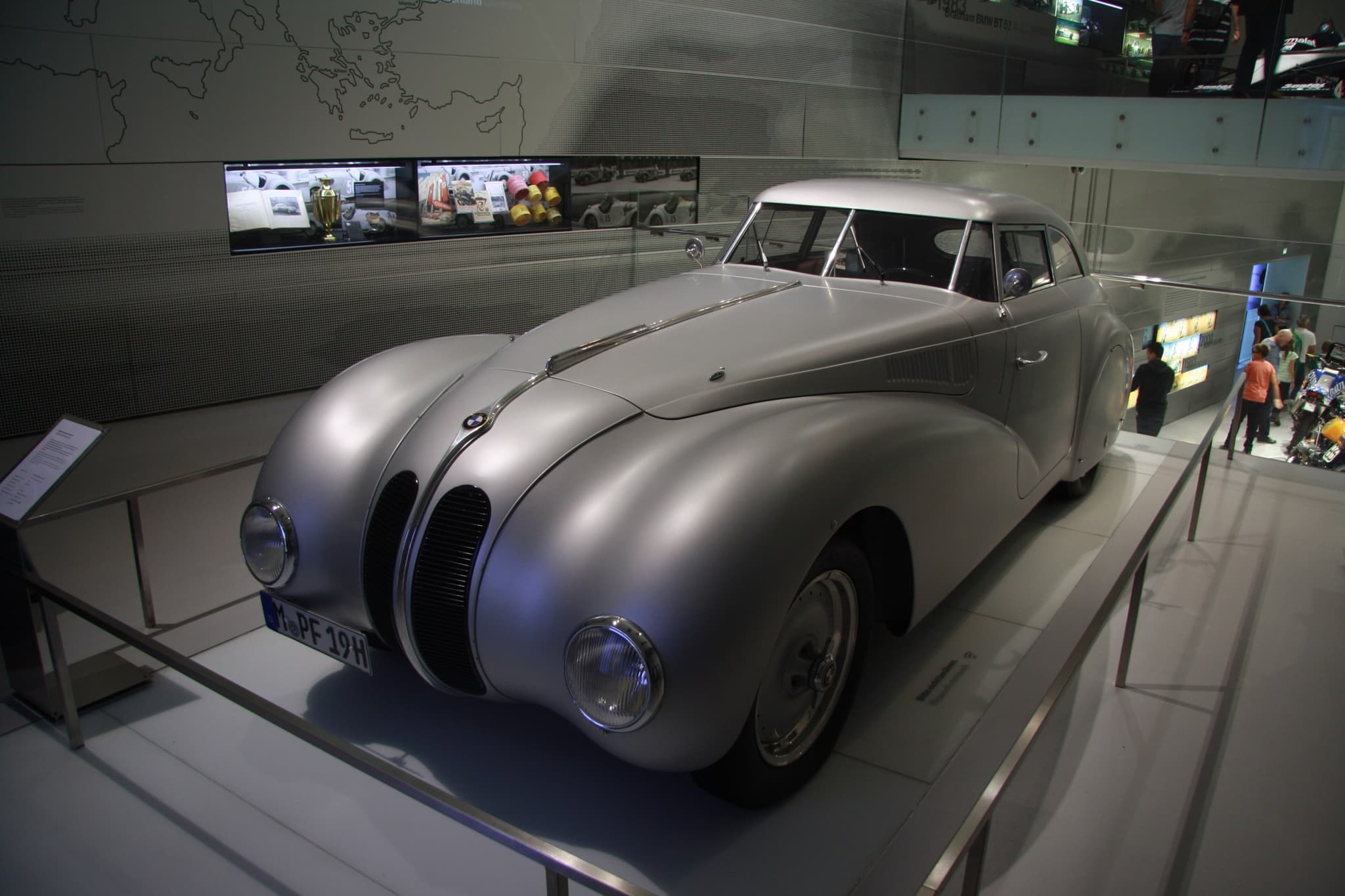
Wunibald Kamm, professor at Stuttgart from 1930 and founder that year of its motor-vehicle research institute, the FKFS, had patented in 1936 a streamlined body with a cut-off tail. For 1940 BMW built a coupé to his findings. Its body was made in the new styling department "under the stewardship of Wilhelm Meyerhuber", BMW says, following Kamm's wind-tunnel specification precisely, and a model of it gave a drag coefficient of about 0.25, against about 0.35 for the Touring coupé (BMW's figures). Under an aluminium skin was a space frame of Elektron, a magnesium alloy, weighing 30 kg by BMW's account, on a 328 chassis lengthened by 20 cm. BMW says it was built in-house in Munich and that on the autobahn towards Salzburg it became "the fastest BMW on record"; Motor Sport credited it with less, and the specifications give both figures.
Lurani and Cortese ran close behind von Hanstein early on, by BMW's account, and then the Kamm coupé was out: after seven laps, BMW said in 2020, or on the eighth, as Motor Sport reported at the time.
Lurani and Cortese had an even faster Elektron B.M.W. coupe, capable of 134 m.p.h., but it ran badly and retired after fuel feed and lubrication troubles on the eighth lap.
After the war it stayed in Germany. BMW's former director of racing, Ernst Loof, took it for his own use, and in it Karl Kling won the two-litre sports-car race at Hockenheim on 11 May 1947, entered by Loof: its only win, BMW's data sheet says. Loof, short of money, later had to part with it, and BMW says it went to the scrap heap after an accident in the early 1950s.
What BMW shows today is a reconstruction, BMW's own project. With no drawings to work from, BMW's heritage department used period photographs, among them pictures of the tubular frame from a private collector in Munich. They were scanned into a three-dimensional model, a full-size foam model was milled from it, and a master school for coachbuilders in Saxony, with BMW's Leipzig plant, shaped a body of aluminium panels over moulds of the foam. For the drivable car BMW commissioned René Große, of Wusterwitz in Brandenburg, who built a frame of aluminium-alloy tubes meant to come close to the weight of the original Elektron one. The car was handed over in March 2010, in time for that year's Mille Miglia, and BMW's own data sheet heads it "Kamm racing saloon (replica)". "We are very proud to be able to bring this car back into the public spotlight", said Karl Baumer, director of BMW Group Classic.source 17source 1source 18source 4source 8source 19source 20
What became of each car
BMW says it moved its Mille Miglia cars out of Munich to a rural hideaway soon after the victory, and that all five came through the war "essentially unscathed"; afterwards, in BMW's words, the three roadsters "resurfaced in Russia, England and America".
| Car | 1940 | Afterwards |
|---|---|---|
| Touring coupé, 85368 | 1st | Taken by American officers in 1945; in North America from 1947; with BMW since 2002 |
| Kamm coupé, 85287 | Retired | Loof's after the war; scrapped in the early 1950s; reconstructed by BMW in 2010 |
| Roadster No. 74, 85464 | 3rd | Raced in the north of England and Scotland, 1950–52 |
| Roadster No. 72, 85463 | 5th | The car BMW's 2011 data sheet names for its own Mille Miglia roadster |
| Roadster No. 71, 85032, the Bügelfalte | 6th | Best of Show at the Concorso d'Eleganza Villa d'Este, 17 May 2026 |
Which roadster went where is not settled. The Frazer Nash Archives record that H. J. Aldington of AFN brought one of the 1940 Mille Miglia cars to England in 1945, where, they say, it inspired the post-war Frazer Nash; Jonathan Wood, telling the Bristol engine's story, calls it one of the Touring-bodied roadsters. Racingsportscars has chassis 85464, Brudes and Roese's car, racing in the north of England and Scotland from 1950 to 1952. BMW's 2011 data sheet presents its own roadster as Briem and Richter's. The Bügelfalte, now in a private collection, won Best of Show at Villa d'Este in May 2026, 86 years after its one race in that body; BMW's 2026 release dates it 1937.source 20source 15source 21source 22source 6source 12source 13
The Mille Miglia Storica
The Mille Miglia is run today as a regularity test, and BMW Classic brings its own cars. "There is not a transporter or trailer in sight," BMW wrote in 2011: the cars are driven from Munich to Brescia, as they were in 1940. In 2003 King Carl XVI Gustaf of Sweden and Prince Leopold of Bavaria drove one of them, a 328 Touring roadster. By BMW's account, Giuliano Cané and Lucia Galliani won the event in the Touring coupé in 2004 and again in 2010. That year the Kamm reconstruction ran too, "70 years after its last, memorable appearance in the race", as BMW put it: the shape of a lost car, back at Brescia, where the original started its only Mille Miglia.source 1source 20
Specification
Production
Sources for Production, Mille Miglia Roadster
- Built
- Several figures in print.BMW AG (BMW Group PressClub Global), "The BMW 328 turns 75" (press kit), 11 May 2011source 1; BMW Classic (BMW Group PressClub Global), "BMW 328 Mille Miglia Roadster" (data sheet), 11 May 2011source 12
- Designers
- One good source.BMW's styling department, Munich. BMW AG (BMW Group PressClub Global), "The BMW 328 turns 75" (press kit), 11 May 2011source 1
- Coachbuilders
- One good source.Two of the three: framed in Munich, skinned by Touring to BMW's design. BMW Classic (BMW Group PressClub Global), "BMW 328 Mille Miglia Roadster" (data sheet), 11 May 2011source 12; BMW AG (BMW Group PressClub Global), "The BMW 328 turns 75" (press kit), 11 May 2011source 1
- Built at
- One good source.Milan for two of the three. BMW AG (BMW Group PressClub Global), "The BMW 328 turns 75" (press kit), 11 May 2011source 1
| Built | 1939–1940 Built, Mille Miglia Roadster Several figures in print.
|
|---|---|
| Designers | Wilhelm Meyerhuber (body) |
| Coachbuilders | Carrozzeria Touring (body) |
| Built at | Munich (body); Milan (body skins) |
Engine
| Engine maker | BMW |
|---|---|
| Engine position | Front |
Performance
Sources for Performance, Mille Miglia Roadster
- Power
- Good sources disagree.BMW Classic (BMW Group PressClub Global), "BMW 328 Mille Miglia Roadster" (data sheet), 11 May 2011source 12; BMW AG (BMW Group PressClub Global), "The BMW 328 turns 75" (press kit), 11 May 2011source 1
- Top speed
- One good source.BMW Classic (BMW Group PressClub Global), "BMW 328 Mille Miglia Roadster" (data sheet), 11 May 2011source 12
| Power | 136 hp Power, Mille Miglia Roadster Good sources disagree.
|
|---|---|
| Top speed | 200 km/h |
Running gear
Sources for Running gear, Mille Miglia Roadster
- Gearbox
- One good source.Four speeds. BMW Classic (BMW Group PressClub Global), "BMW 328 Mille Miglia Roadster" (data sheet), 11 May 2011source 12
- Gears
- One good source.BMW Classic (BMW Group PressClub Global), "BMW 328 Mille Miglia Roadster" (data sheet), 11 May 2011source 12
- Layout
- One good source.BMW AG (BMW Group PressClub Global), "The BMW 328 turns 75" (press kit), 11 May 2011source 1
- Front brakes
- One good source.Ventilated magnesium anchor plates. BMW Classic (BMW Group PressClub Global), "BMW 328 Mille Miglia Roadster" (data sheet), 11 May 2011source 12
- Rear brakes
- One good source.Ventilated magnesium anchor plates. BMW Classic (BMW Group PressClub Global), "BMW 328 Mille Miglia Roadster" (data sheet), 11 May 2011source 12
| Gearbox | Manual |
|---|---|
| Gears | 4 |
| Layout | RWD |
| Front brakes | Alfin drum |
| Rear brakes | Alfin drum |
Body and chassis
Sources for Body and chassis, Mille Miglia Roadster
- Body
- One good source.BMW Classic (BMW Group PressClub Global), "BMW 328 Mille Miglia Roadster" (data sheet), 11 May 2011source 12
- Panels
- One good source.A thin skin over a tube frame. BMW AG (BMW Group PressClub Global), "The BMW 328 turns 75" (press kit), 11 May 2011source 1
- Chassis
- One good source.A space frame mounted on the 328 chassis. BMW AG (BMW Group PressClub Global), "The BMW 328 turns 75" (press kit), 11 May 2011source 1; BMW Classic (BMW Group PressClub Global), "BMW 328 Mille Miglia Roadster" (data sheet), 11 May 2011source 12
| Body | Roadster |
|---|---|
| Panels | Aluminium |
| Chassis | Space frame |
Dimensions and weight
| Kerb weight | 700 kg |
|---|
Production
Production: how far the sources agree
- 3, the 1940 race roadsters
- One good source.
Sources
Every source the site cites is on the sources page.
- Primarymade at the time, by the maker or by people who were there
- Referenceserious later work: clubs, specialists, magazines, books
- Databaseresults and listings, entry by entry
- BMW AG (BMW Group PressClub Global), "The BMW 328 turns 75" (press kit), 11 May 2011, "The 1940 Mille Miglia": the start at 6.40 a.m.; "The debut Mille": what success meant; "The debut Mille": the prizes and the "international breakthrough"; "The 1940 Mille Miglia": the name, the distance, the fastest lap, the margin; "The 1940 Mille Miglia" and the styling department: the design, the Bügelfalte, the Touring bodies, the race engines, the Berlin–Rome race; the Touring coupé and the Kamm coupé: why Touring; the Kamm coupé: the design, the frame, the speed, the race; "The BMW 328 today": the regularity event, 2003, 2004 and 2010; the 1940 Mille Miglia. press.bmwgroup.com/global/article/detail/T0107839EN Primary
- racingsportscars.com, Mille Miglia 1940, results, the results: No. 70, 1st; the results: entries, chassis, times, the winning average. racingsportscars.com/results/Mille_Miglia-1940-04-28.html Database
- racingsportscars.com, Mille Miglia 1938, results, the results: the 2-litre class; the race's length; the results: Nos. 108, 109, 113 and 114, and the winners; the winners. racingsportscars.com/results/Mille_Miglia-1938-04-03.html Database
- Motor Sport, "The Brescia Grand Prix", Jun 1940, p. 18, p. 18, the circuit; p. 18: the circuit, the field, the race, the team prize; p. 18, the open cars; p. 18, the report; p. 18, "The open B.M.W."; p. 18, the Kamm coupé. motorsportmagazine.com/archive/article/june-1940/18/brescia-grand-prix Primary
- Motor Sport, "Another Alfa win in the Mille Miglia", Apr 1938, p. 11, p. 11, the route and the Alfa Romeo team; p. 11: the start, Fane in the works team, his average, and the accident at Bologna. motorsportmagazine.com/archive/article/april-1938/11/another-alfa-win-in-the-mille-miglia Primary
- racingsportscars.com, "BMW 328 – All Results", page 1, the chassis column for 1938; page 1–2, chassis 85032 in 1938 and 1940; pages 2–3, chassis 85032 in 1940; 85464, 1950–52; index, page 2 (1940). racingsportscars.com/type/results/BMW/328.html Database
- Motor Sport, "Continental Notes and News" ("Desert Chariots"), May 1939, p. 27, p. 27, "Desert Chariots". motorsportmagazine.com/archive/article/may-1939/27/continental-notes-and-news-tripoli-may-1939 Primary
- BMW Group (BMW Group PressClub Latin America and Caribbean), "80 years ago: victory of BMW at the Mille Miglia" (press release), 28 Apr 2020, the race, the stop before the finish and the team award; the retirement. press.bmwgroup.com/latin-america-caribbean/article/detail/T0307595EN Primary
- Motor Sport, "Mercedes Wins '1,000 Miles'", May 1931, p. 13, p. 13, the 1931 winners. motorsportmagazine.com/archive/article/may-1931/13/mercedes-wins-1000-miles Primary
- racingsportscars.com, Mille Miglia results, 1931–37 (group), the winners, 1931–37. racingsportscars.com/track/archive/Mille%20Miglia.html Database
- racingsportscars.com, Mille Miglia results, 1947–57 (group), the winners' rows, 1947–57. racingsportscars.com/track/archive/Mille%20Miglia.html Database
- BMW Classic (BMW Group PressClub Global), "BMW 328 Mille Miglia Roadster" (data sheet), 11 May 2011, data sheet: the bodies "according to BMW designs"; data sheet; data sheet: the weight; data sheet: the drivers. press.bmwgroup.com/global/article/detail/T0107839EN Primary
- BMW Group (BMW Group PressClub Slovenia), "'Best of Show': BMW 328 'Bügelfalte' wins the Trofeo BMW Group" (media information), 17 May 2026, "The only special roadster produced at the Munich plant"; Best of Show, 17 May 2026. press.bmwgroup.com/slovenia/article/detail/T0457929SL Primary
- BMW Classic (BMW Group PressClub Global), "BMW 328 Berlin-Rome Touring Roadster" (data sheet), 11 May 2011, data sheet. press.bmwgroup.com/global/article/detail/T0107839EN Primary
- BMW Group (BMW Group PressClub USA), "Return of a Legend: BMW Group Mobile Tradition acquires the BMW 328 Coupé Touring – Winner of the 1940 Mille Miglia" (media information), 22 Oct 2002, the history and data sheet; the Touring coupé's journey. press.bmwgroup.com/usa/article/detail/T0022145EN_US Primary
- racingsportscars.com, Le Mans 24 Hours 1939, results, No. 26, 5th, 1st S2.0. racingsportscars.com/results/Le_Mans-1939-06-18.html Database
- Hans Christoph Graf von Seherr-Thoß, "Kamm, Wunibald", Neue Deutsche Biographie, vol. 11 (1977), pp. 82–83, vol. 11, pp. 82–83: the FKFS and the 1936 patent. deutsche-biographie.de/sfz39669.html Reference
- BMW Classic (BMW Group PressClub Global), "BMW 328 Kamm racing saloon (replica)" (data sheet), 11 May 2011, data sheet: the stretched chassis, Kling's win, the title "(replica)". press.bmwgroup.com/global/article/detail/T0107839EN Primary
- racingsportscars.com, Hockenheim 1947, results, the results: No. 47, 1st. racingsportscars.com/results/Hockenheim-1947-05-11.html Database
- BMW Group (BMW Group PressClub Global), "Back to the future: the BMW 328 Kamm Coupé" (press release), 23 Apr 2010, Loof, the end of the car and the reconstruction; the cars' wartime hideaway and where they resurfaced; the handover in March 2010. press.bmwgroup.com/global/article/detail/T0079675EN Primary
- The Frazer Nash Archives, "Frazer Nash-BMW", the 328 Sports panel: the 1940 car brought to England in 1945. frazernasharchives.co.uk/index.php?idPage=35 Reference
- Jonathan Wood, "Bristol 400", Bristol Owners Heritage Trust, 10 Jun 2020, Aldington in Munich, 1945. bristolownersht.com/2020/06/10/bristol-400-by-jonathan-wood Reference