BMW 328 Engine
BMW's six-cylinder block from the 326 saloon under Rudolf Schleicher's aluminium head, with one camshaft and cross pushrods. After the war its drawings went to Bristol, whose sixes developed from it ran in Bristols, Frazer Nashes, ACs and British racing cars until 1961; in Germany the 328's own engines drove the first post-war racers. Also searched as the BMW 328 motor.
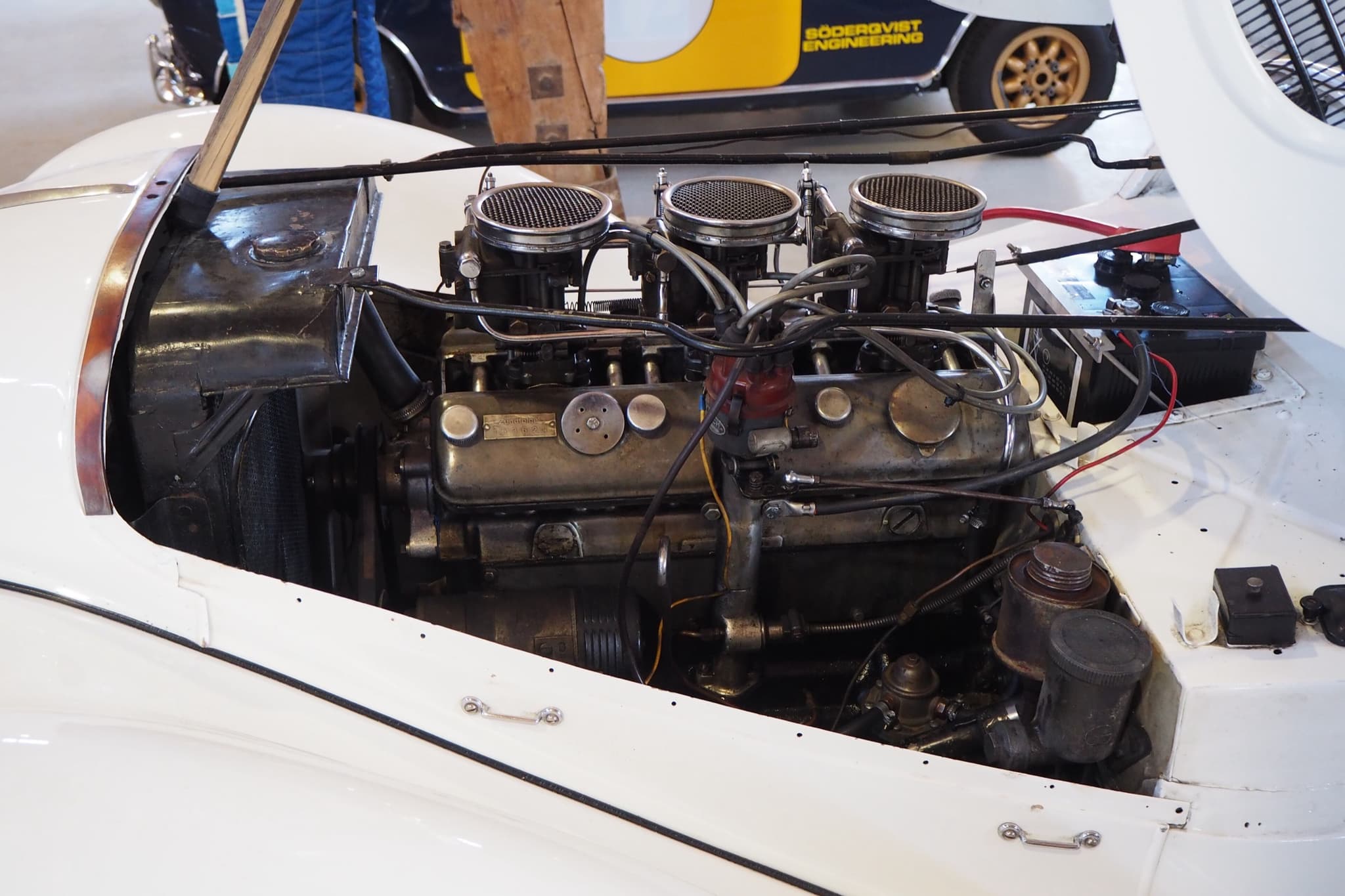
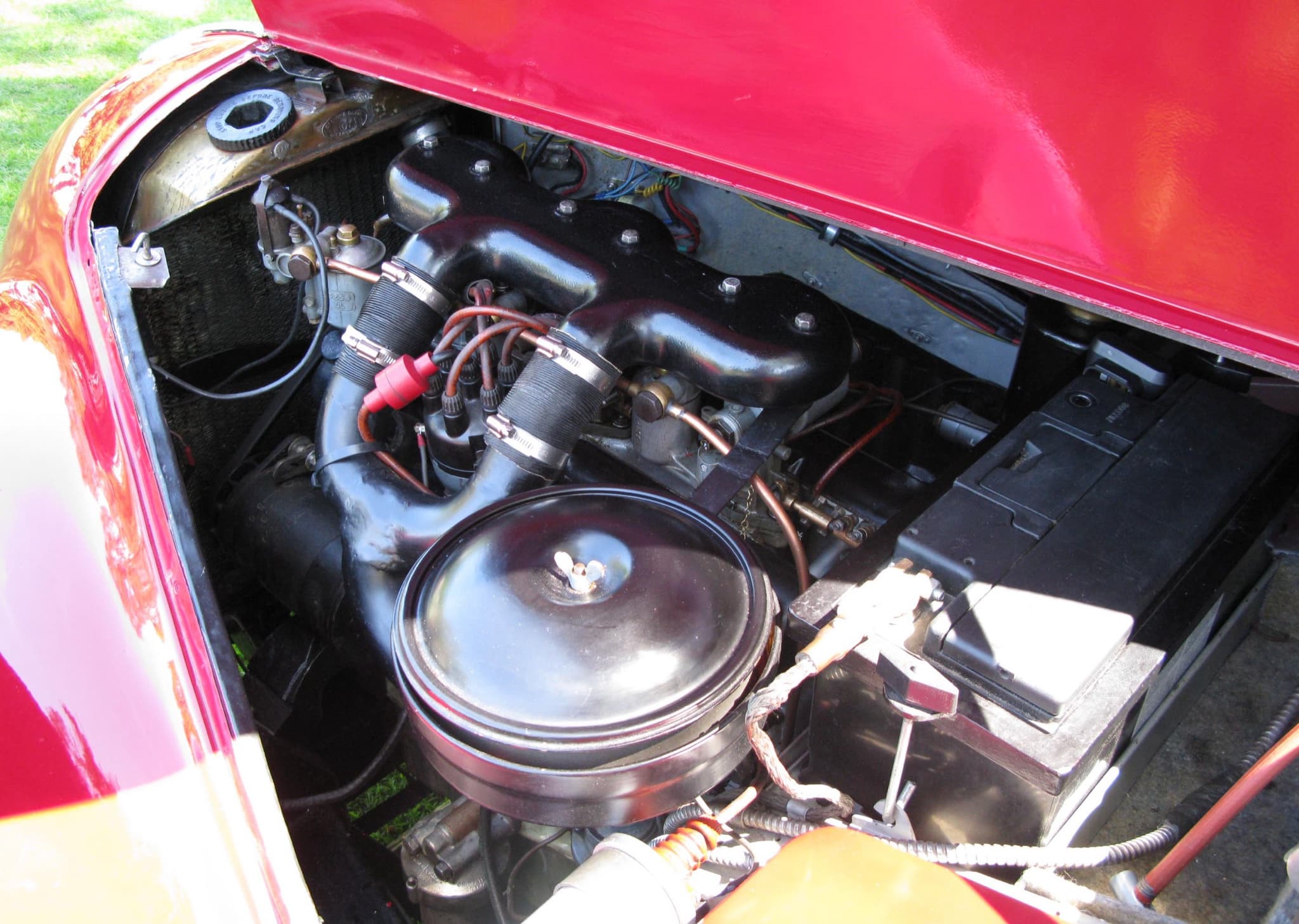
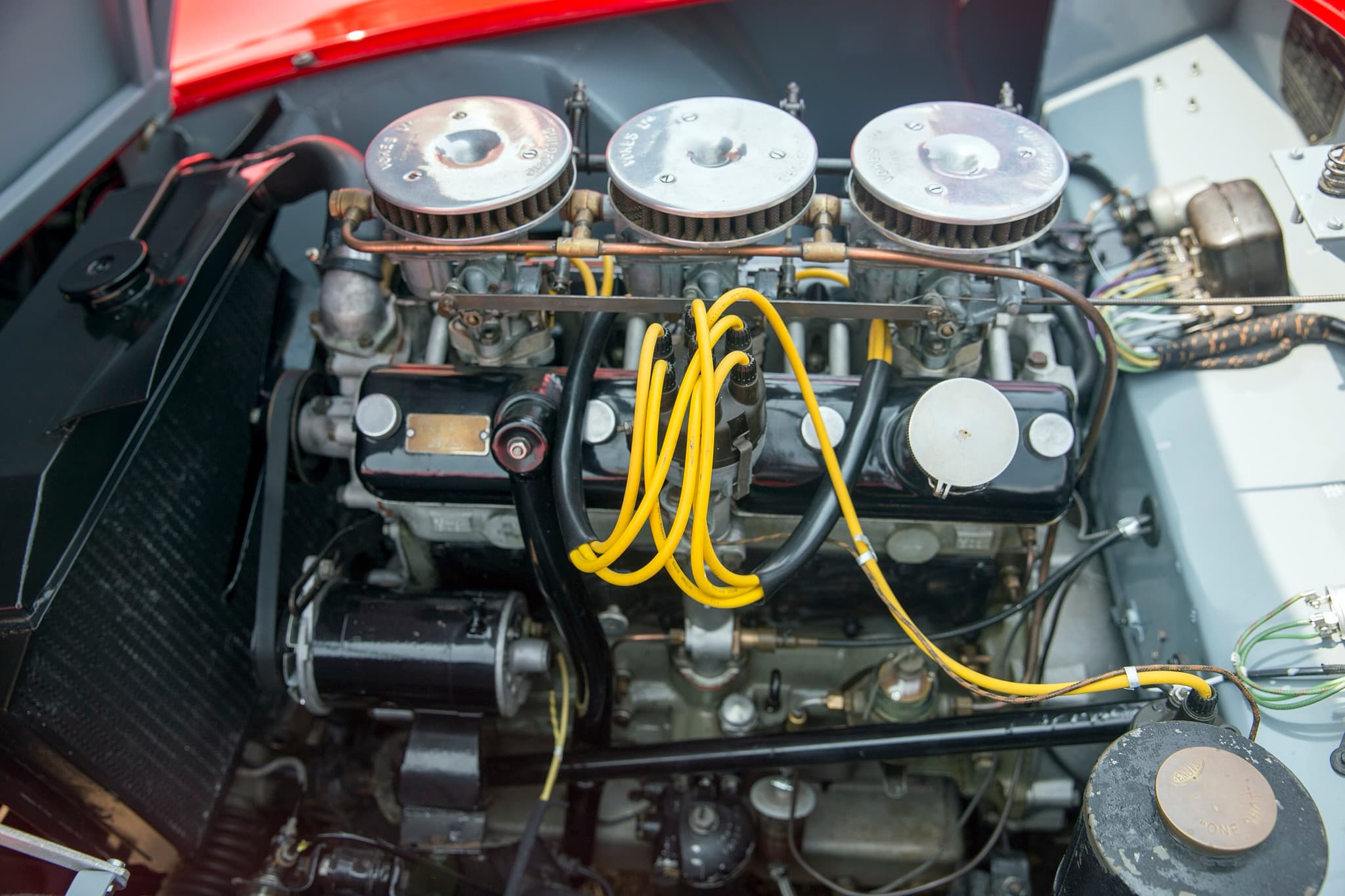
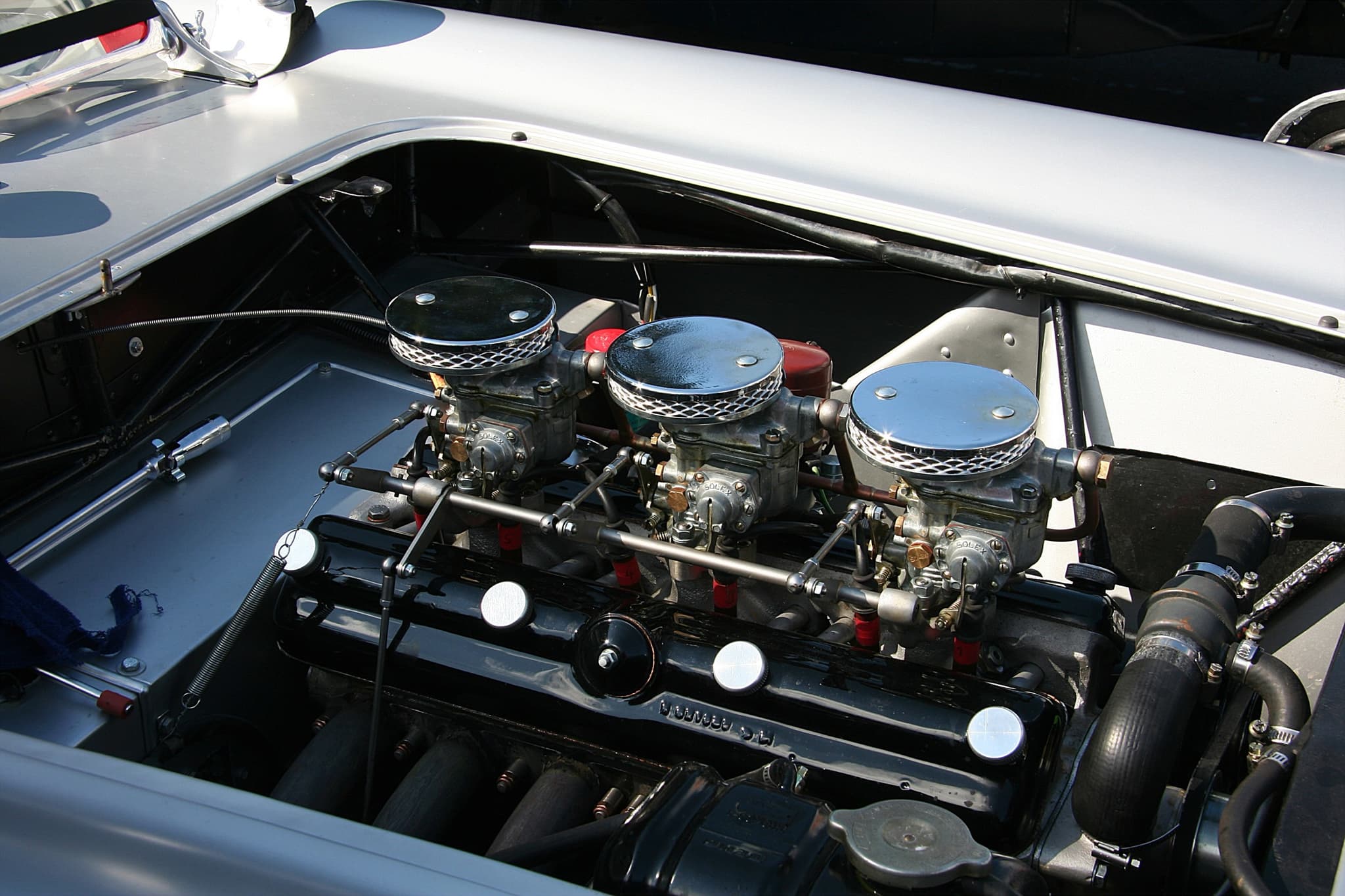
The engine of a BMW 328 is laid out like a racing twin-cam: an aluminium head with two rocker shafts and two rows of inclined valves, and three carburettors standing on top. It has one camshaft, low in a cast-iron block taken from BMW's 326 saloon (sedan). Rudolf Schleicher's engineers worked the second row of valves with pushrods laid across the head, so that the head was, in Denis Jenkinson's words, "to all intents and purposes like a conventional twin overhead camshaft layout". The engine outlasted the car by more than 20 years. Its drawings went to Britain in 1945, and Bristol built sixes developed from it until 1961, for its own cars, for Frazer Nash and AC and for British racing cars of the 1950s. In Germany the 328's own engines powered the first sports-racing cars after the war.source 1source 2source 3source 4
Where the engine came from
BMW's six-cylinder car engines began with Schleicher. His entry in the Neue Deutsche Biographie has him designing a first six-cylinder engine in 1932 and a series of up to 3.5 litres following from 1934; the Frazer Nash Archives credit him and Fritz Fiedler, who had worked together at Horch, with the six-cylinder cars that made BMW's name as a car maker. In the 319, the 328's forerunner, the six had upright valves worked by pushrods and rockers, and Jenkinson put the limit on its power down to breathing.
Racing practice offered two cures, twin overhead camshafts and a supercharger. Jenkinson explains why BMW took neither: any change had to suit the production lines, and nothing radical could be accepted. BMW's own history gives money as the reason.
The lack of resources for an all-new design meant that the BMW 328 had to make do with a modified version of the 50 hp engine from the BMW 326.
Jenkinson started his count from a different engine, the 319's sports six, whose bore was a millimetre smaller and whose stroke was the same, so in his account the new head lifted the output from 55 bhp, where BMW's starts at 50. Jonathan Wood dates Schleicher's decision to build a new head for an existing block to 1935, and names a BMW engineer, Rudolf Flemming, as having had a large part in its design; BMW and Jenkinson credit Schleicher and his team.source 5source 6source 1source 2source 3
Schleicher's head: cross pushrods and hemispherical chambers
The new head was cast in aluminium alloy and bolted to the standard block, and it kept the old camshaft, low on the left of the engine and driven by a short chain, a "silent running Duplex roller chain" in Motor Sport's 1937 guide to AFN's car. The old engine had 12 upright valves worked by 12 pushrods from a single rocker shaft. The new head had two rocker shafts and two rows of valves set at an angle to each other, the inlets on the left and the exhausts on the right. Six pushrods rose to the inlet rockers. The other six worked a second set of rockers, which pushed six short rods across the top of the head, inside alloy tubes, to the rockers over the exhaust valves. Motor Sport's survey of engine design in February 1938 put it in a line: the BMW's single camshaft "operates the distant valves via rockers and horizontal push-rods".
The engine research came up with a new cylinder head design which transformed the 2-litre six-cylinder engine without making any major production changes.
The Bristol Owners' Club counts 18 pushrods in all and borrows L. J. K. Setright's phrase for them, "a forest of pushrods". Motor Sport's 1937 guide and the Frazer Nash Archives give the angle between the two rows of valves as 90 degrees, which gave each combustion chamber its hemispherical shape; the BMW Historic Motor Club's 45 degrees is each valve's lean from the vertical. The last idea, as Jenkinson saw it, was in the ports: the inlets were cast to run straight down into the head, not horizontally as was usual for a hemispherical head, which made room for longer inlet tracts and for three downdraught carburettors on top.source 1source 7source 8source 9source 10source 11
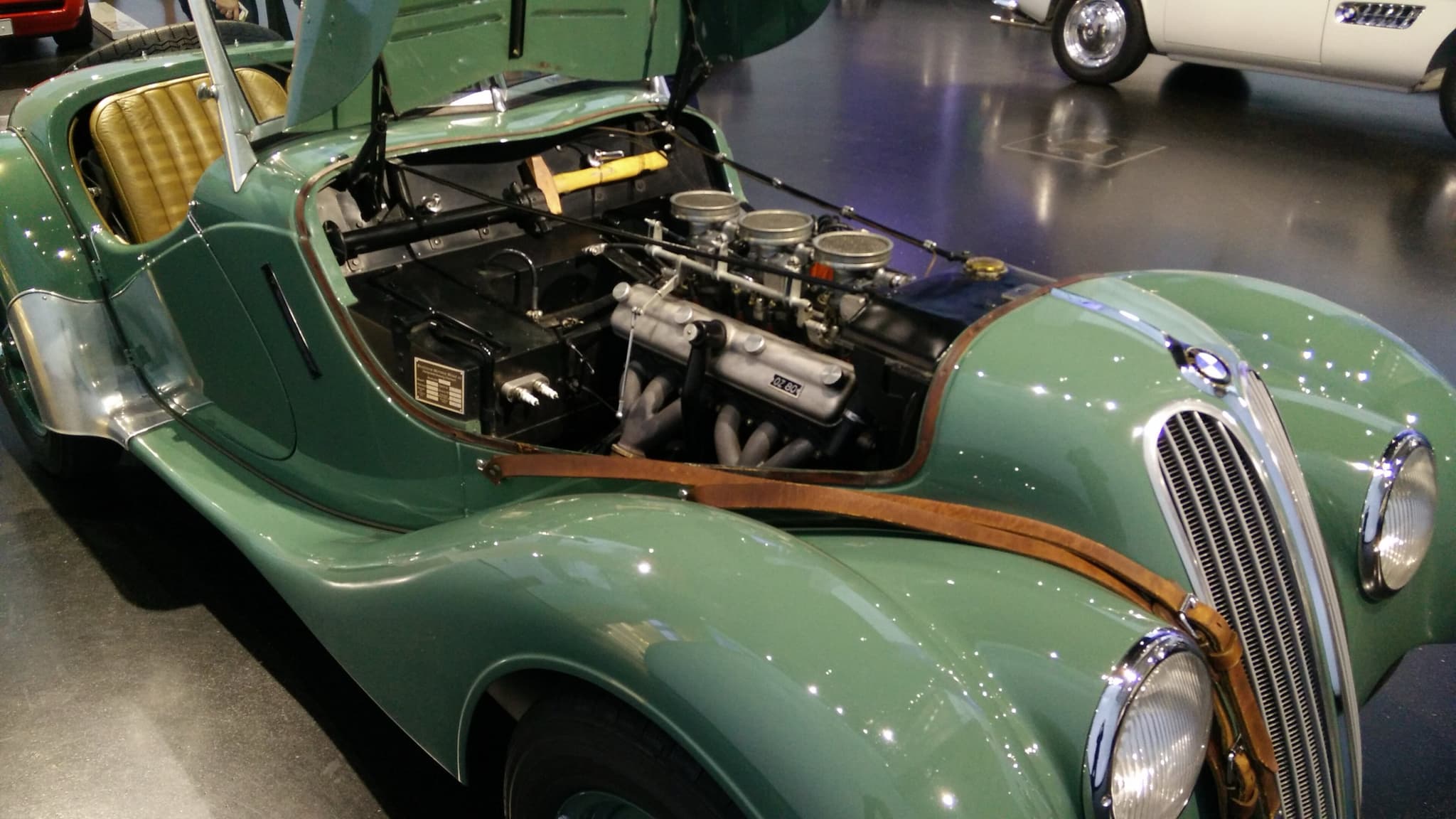
Outputs by tune: road and race
BMW, AFN's listing of 1937, Cecil Clutton and Jonathan Wood all give the road engine the same output; where they part is the engine speed at which it came, and the specifications set out which source gives which.
Racing pushed the output up quickly. Jenkinson traced the climb in three steps: an easy first gain, 110 bhp by 1938, and more again from the factory's racing engines by the end of 1939. For the Mille Miglia of 1940, BMW says, the race engines had stronger crankshafts with nine counterweights, among them a reinforced central weight that took away the risk of the shaft bending.
These crankshafts and a number of other upgrades – notably to the valve control – enabled the race engines to run at speeds of up to 6,000 rpm. This pushed the engine output recorded on the test rig up to 136 hp.
For the 1940 cars themselves BMW's own texts do not agree, and Motor Sport's report of the race and Mike Lawrence, writing in 1986, add figures of their own; Lawrence gave the works cars 140 bhp that year. BMW 328 Mille Miglia and the Touring coupé show BMW's and Motor Sport's figures in their specifications.source 12source 13source 7source 14source 3source 1source 2source 15source 16source 4
The 327/28: the 328 engine in the touring car
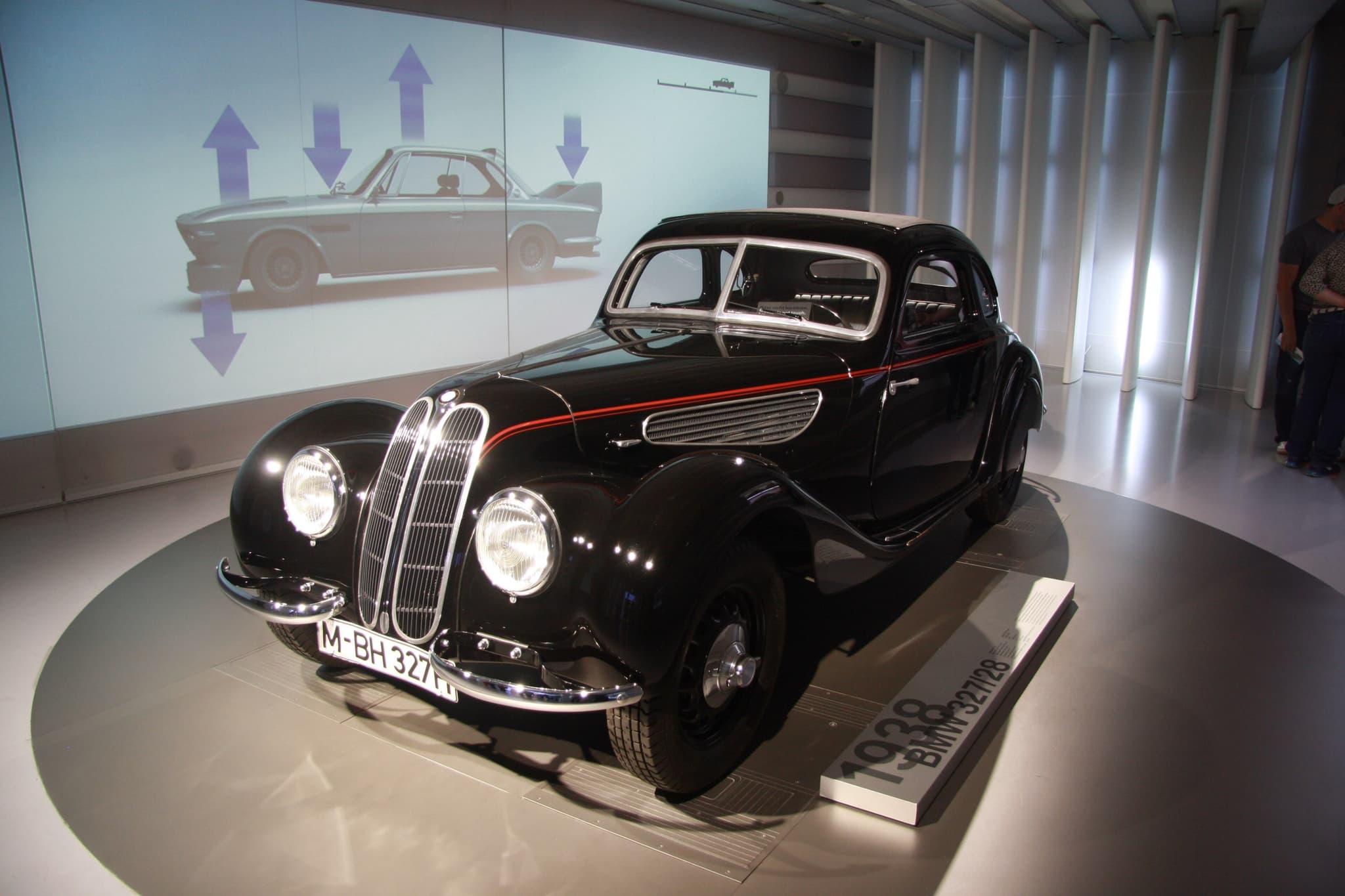
BMW's 327, a coupé and cabriolet that began in 1937 with the 326's engine, could also be had with the 328's. The car is the 327/28 (Wood writes 327/80), and German Wikipedia says it can be told from the ordinary 327 outside only by its wheels, held by centre-lock wing nuts, and a different speedometer. Wood gives it a top speed of about 140 km/h (87 mph). AFN sold it in Britain as a Frazer Nash-BMW, and Motor Sport's notes on AFN's range for 1939 gave the 327 with the 328's engine a higher cruising speed and a higher maximum than the 327 with its own.
On how many were built, the sources differ. Wood counts 580, coupés and cabriolets together; the production table in German Wikipedia's article on the 327 gives 569, built from 1938 to 1940, where Wood has the car introduced for the 1939 season. They disagree over the bodies as well: Wood says the coachbuilder Autenrieth of Darmstadt made both bodies, German Wikipedia that Ambi-Budd of Berlin supplied the 327's.
The 327/28 has a place in the Bristol story too. H. J. Aldington drove one to Filton in 1945, Wood writes, and George White of the Bristol Aeroplane Company told him it was exactly the kind of car he had in mind.source 3source 17source 18
After 1945: how the engine came to Britain
Bristol had planned for cars long before the war ended. In October 1941 the Bristol Aeroplane Company set out, in a post-war planning document, a car with a six-cylinder engine of two to 2.5 litres, and named Lancia and BMW as the makers to follow: their cars, the document said as Wood quotes it, were "'designed' in the best sense of the word", not merely assembled.
AFN, the importer of the Frazer Nash-BMW 328, had something Bristol wanted. Andrew Blow counts its BMW licence of 1934, which carried a right to manufacture, among the reasons Bristol was keen to talk. Serious work began on 9 May 1945, when Don Aldington called on Eric Storey at Filton, and by July, Blow writes, Bristol had agreed to buy AFN outright, once the licence's legality and its transfer to Bristol had been examined. Wood describes a majority shareholding, taken that July, with Reginald Verdon Smith as AFN's chairman and H. J. Aldington as its managing director.
Wood tells the Munich side as two journeys. On the first, soon after the war in Europe ended, Aldington went in uniform to find the car he had raced, and crashed, at Hamburg in 1939 (Wood) and left in Germany for repair (Blow). Wood says he could not find it, and that on the advice of BMW's sales director Fritz Troetsch he came back with one of the 1940 Mille Miglia roadsters instead. The second, later in 1945, was Bristol's. Aldington flew to Munich in a Stirling bomber and brought back six BMW engines, listed on a BMW delivery note dated 31 August, with the drawings of the 326, 327 and 328. Blow, writing from Bristol's records, puts the drawings, the prototype engines and Aldington's own car together in October 1945: in his account the car came home too.
Aldington also brought news of BMW's newer engines. Wood names an experimental two-litre twin-cam, the 318, meant to succeed the 328's engine, and the 3½-litre six of the 335 with a 328-type head; the 328's six won because it was available and proven. Lawrence has Aldington trying to bring a 2.5-litre twin-cam six to Bristol, too late: the company had gone too far with the engine it had to be interested.
Fritz Fiedler, the 328's chassis designer, worked on the engine too. The Frazer Nash Archives, which call him a consultant to Bristol on the 400, say he did most of his work at Isleworth, where he took charge of the post-war Frazer Nash and developed the FNS engine for it.
On the Isleworth dynamometer he got over 100 bhp from the Bristol engine before the Bristol engine men did.
The partnership did not last. In April 1947, Wood writes, the agreement with Frazer Nash was unscrambled, and control of AFN went back to the Aldingtons. Lawrence gives the engine's part in it: AFN wanted up to 50 per cent more power than Bristol would give the 400, so the two agreed to part, and Bristol supplied AFN with FNS engines developed with Fiedler. Lawrence spelled the letters out as Frazer Nash Special; the Bristol Owners Heritage Trust writes Frazer Nash Sports.source 3source 19source 4source 6source 20
What Bristol made of the BMW engine
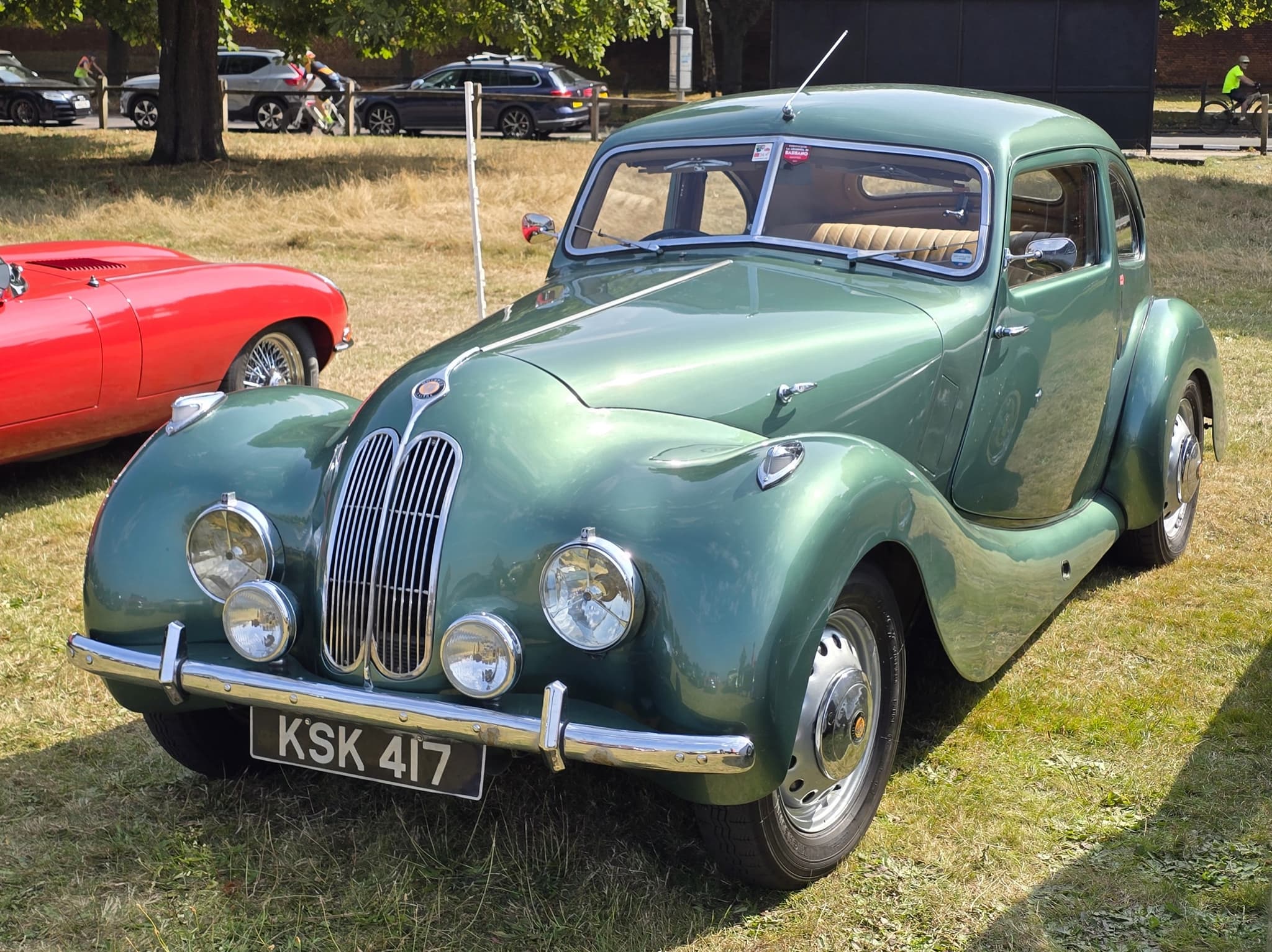
How the engine came to Bristol is told two ways, and so is what it became. Mike Lawrence wrote in Motor Sport in 1986 that Aldington went to Munich with one of the teams that took German technology away as war reparations, and the Bristol Owners' Club's guide says Bristol "liberated" the remains of BMW at the end of the war. Wood answers with Rainer Simons's BMW 328: From Roadster to Legend, which says that "in compensation quantities of cash in English currency were sent to Munich". Blow, from Bristol's records, thinks a payment "likely, but cannot yet be proved", and writes that the deal was no part of war reparations.
On the engine itself the voices are closer. Jenkinson, describing the 328's head in 1986, saw the Bristol in it.
If all this sounds like the description of a Bristol cylinder head as produced in England in 1946 it is no surprise, for the Bristol engine was an anglicised version of the pre-war BMW engine.
Lawrence, in the same issue, gave the Bristol engine "the same dimensions and layout as the BMW 328" but warned that one "has to be careful in describing the lineage": the ideas and drawings came from BMW, then passed through a drawing office in Bristol with ideas of its own. The Bristol Owners' Club says Bristol put the engine back into production with "only minor changes". In the Trust's film below, a Bristol voice puts it more bluntly: "People say, oh yes, it's a BMW made in England. It certainly wasn't."source 4source 3source 19source 1source 11
The Bristol engine: what Bristol changed
The first Bristol-built engine was running in May 1946, by Bristol's own historians' account, and went for testing into a Bristol director's own 1938 327, which had been brought up to the 328's engine specification in 1939. It gave more power than Bristol thought a production car needed, and the production engines were set lower. The Bristol Owners' Club lists what changed: Whitworth threads instead of metric ones, better materials (the cylinder liners were of Brivadium, a very hard alloy from Bristol's aero engines) and, according to Setright, a higher standard of build all round. Wood adds 10 mm sparking plugs, changes to the camshaft and the carburation, and three SU carburettors, by all accounts at Aldington's insistence, on the 85A engine that most 400s had, though a good number kept three Solexes. Bristol also copied the Hurth gearbox (transmission) from the later 328s.
Then Bristol developed it. The club's 100 series, for the 403 to the 405, had larger valves, more valve overlap, larger main bearings, a different oil pump and lighter valve gear. The 110 series of 1958, for the 406, grew to 2,216 cc with a larger bore and a longer stroke, and gave its power lower down. AFN's FNS engines had more overlap and larger inlet tracts; the BS series, the "Bristol Sports" engines, was built on the 100-series block. For the Bristol 450 racing cars of 1953, Lawrence writes, the compression was raised, the valves were enlarged and a head with six ports replaced the standard head's three siamesed ones. How far it went is disputed.
In its original Bristol production form, this engine produced 80 bhp but eventually it gave a little over 140 bhp, this near doubling of power being achieved with no loss of reliability. Higher power figures (up to 170 bhp) have been quoted by some but we remain sceptical.
The Bristol Owners' Club is one of those that quote the higher figure, for the 450s that raced at Le Mans.source 3source 11source 4
The cars it powered
Every Bristol from the 400 of 1947 to the 406 used the engine; the 400 itself, Wood writes, had a 326 chassis and a body after the 327 coupé. All but two post-war Frazer Nashes used it too, from the Le Mans Replica, named after the fourth car built, which finished 3rd at Le Mans in 1949, to the Sebring of 1954; the Le Mans Replica's front and rear suspension were still based on the 1930s BMWs'. By the Frazer Nash Archives' list the exceptions were one Targa Florio with an Austin four, shown in 1952, and the last car the factory built, the Continental of 1957, with a BMW V8. Blow counts 85 post-war Frazer Nashes sold by AFN.
The engine reached Formula 2 as well, which was the World Championship formula in 1952 and 1953. Lawrence tells how an FNS engine "had somehow gone through the back door at Bristol" into the Cooper-Bristol of 1952, which Mike Hawthorn drove, and how a rift opened between AFN and Bristol. ERA used a Bristol six in its G-type, meant only as a stop-gap, and Stirling Moss drove it from the European Grand Prix at Spa on 22 June 1952; Bristol bought the G-type and its spares when ERA's owner, Leslie Johnson, left the business, and its own 450 grew from them. A 450 finished 5th overall and won the two-litre class at the Reims 12 Hours in 1953; at Le Mans in 1954 the three 450s finished 7th, 8th and 9th, the first three places in the class, and in 1955 they did it again.
In motor racing, it follows as the day does the night, that when there appears an engine which is powerful, reliable and available, there shall grow up around it a category of racing.
AC fitted the 100-series engine, in its sharper forms, to the Ace and the 110 series to the Greyhound, and the BS engines went, the club says, into Arnolt-Bristols, Coopers, ERAs, Lotuses, Listers, Tojeiros and a number of one-offs. Lawrence's list adds Kieft.source 3source 21source 19source 4source 11
In Germany: Veritas, AFM, Eisenach and the specials
In Germany the engine stayed in its cars, and the cars went racing again. Veritas was founded in 1947 by Ernst Loof, BMW's former head of racing, to build sports cars on the 328, and it often began with a used one and gave it a more streamlined body; by the BMW Historic Motor Club's count, 32 Veritas cars had been built by 1950, all but one with 328 engines, and the firm stopped building cars in 1953. BMW says the 328 and the cars built from it were still dominating the two-litre class into the 1950s.
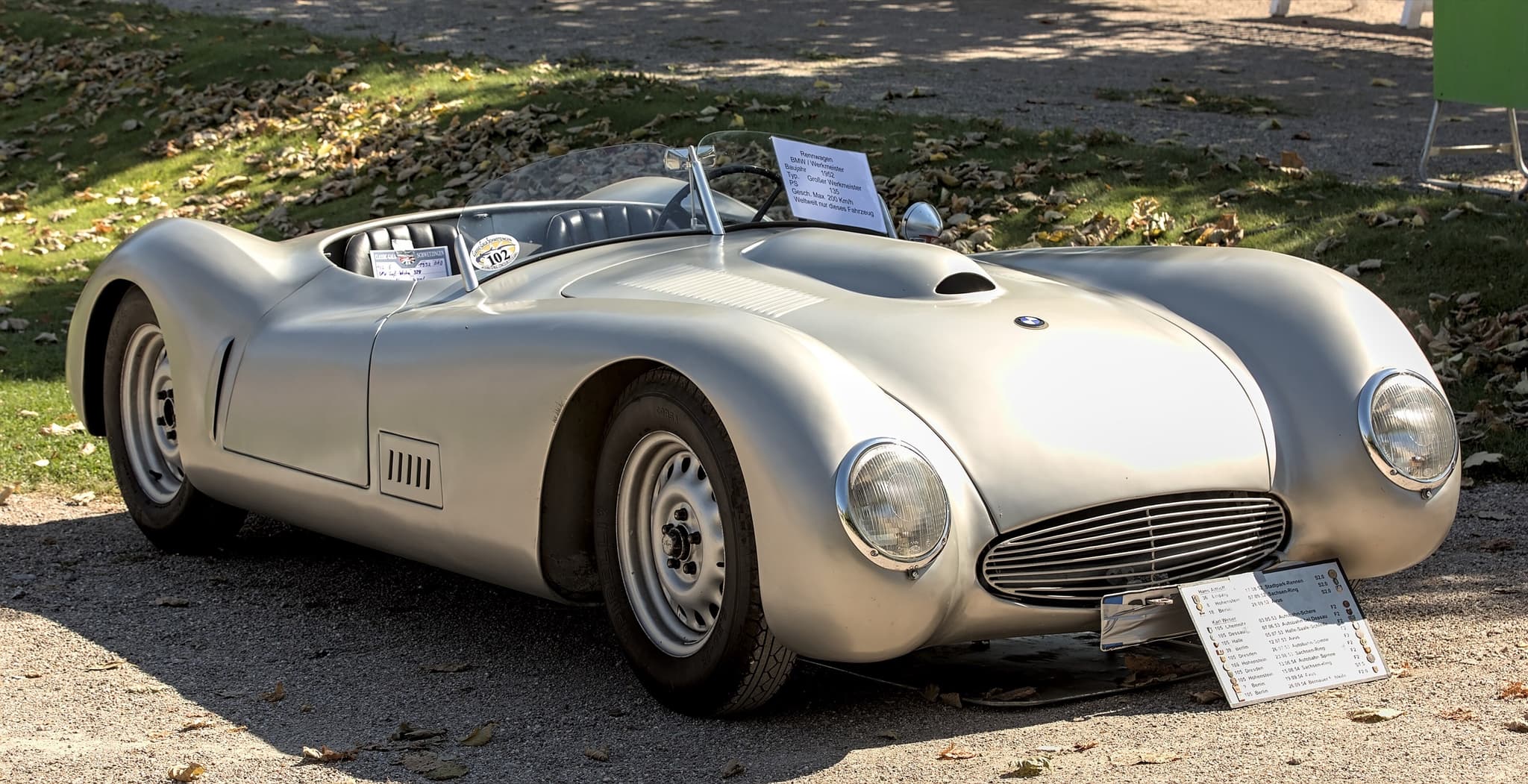
German Wikipedia's article on the 328 gives reasons for so many conversions and specials: the engine was almost the only competitive one left in Germany, there were enough of them, and its size suited the new Formula 2. The same article says Veritas and AFM made their first cars from existing BMWs, and that at Eisenach, by then across the border in the east, development of high-performance cars based on the 328 went on under the EMW name, for the state racing collective, and that Veritas, AFM and the collective all built smaller versions of the engine, with roller-bearing crankshafts, for 1.5-litre racing. It names other builders too: several 328s converted for competition in the workshop of Reif, the former BMW agent in Chemnitz; the Grosser Werkmeister, built by Georg Werkmeister in Dingelstädt; and, outside Germany, Maurice Monnier's Monnier Spéciale of 1947, built with a 328's running gear and engine parts.source 22source 2source 23source 3
The end of the line
BMW's own post-war six went back to the 326. When Jenkinson visited Munich in 1955, guided by Fiedler, by then head of BMW's design department, the six in the cheaper BMW was, he wrote, "virtually a re-designed pre-war Type 326 engine". Bristol carried its version on to the 2.2-litre 110 series of the 406. As the 1950s ended, Lawrence writes, Bristol planned a 3.5-litre six to replace it, bought a Chrysler automatic gearbox to try, and found it "came with a V8 engine attached"; its own engine work stopped, and from 1961 Bristols had Chrysler V8s.
Some of the engine's working life survives on paper. In 2019 the Bristol Owners Heritage Trust was given about 500 of Bristol's test-bed cards from the 1950s, from Tony Crook's estate, most of them for sports and racing engines: Cooper and ERA engines, the FNS, the BS series and the 450's. </content>source 24source 11source 4source 3source 20
Sources
Every source the site cites is on the sources page.
- Primarymade at the time, by the maker or by people who were there
- Referenceserious later work: clubs, specialists, magazines, books
- Uncheckedencyclopaedias and enthusiast sites: cited beside a good source, named in the sentence, or marked Unchecked
- Denis Jenkinson ("D.S.J."), "BMW type 328: fifty years ago", Motor Sport, Jun 1986, p. 40, p. 40, the new cylinder head and its valve gear; p. 40, the 319's engine, its breathing, twin camshafts and supercharging, the bore; p. 40, the head, the rockers and the cross pushrods; the inlet ports; the quotation; p. 40, the outputs from 1937 to the end of 1939; p. 40, the quotation. motorsportmagazine.com/archive/article/june-1986/40/bmw-type-328-fifty-years-ago Reference
- BMW AG (BMW Group PressClub Global), "The BMW 328 turns 75" (press kit), 11 May 2011, the engine: the 326's block and the new head; the engine, p. 6: the quotation; "The 1940 Mille Miglia": the race crankshafts; the quotation; the 328 and its offspring in the two-litre class into the 1950s. press.bmwgroup.com/global/article/detail/T0107839EN Primary
- Jonathan Wood, "Bristol 400", Bristol Owners Heritage Trust, 10 Jun 2020, the BMW-derived engine to the end of the 406 in 1961; the 328's head: Schleicher in 1935; Rudolf Flemming; the 328's engine in its original form; the 327/80: the 1939 season, 580 built, the bodies, 87 mph; Aldington at Filton; the first Bristol engine's test car; the 1941 planning document; July 1945; the two visits to Munich; the 318 and 335 engines; April 1947; Simons quoted on the payment; May 1946; the plugs, camshaft and carburettors; the gearbox; the engine in every Bristol to 1961; the 400's chassis and body; Eisenach in 1945, over the border in East Germany; the Chrysler V8 after the 406, 1961. bristolownersht.com/2020/06/10/bristol-400-by-jonathan-wood Reference
- Mike Lawrence ("M.L."), "Motor Racing – Bristol Fashion", Motor Sport, Jun 1986, p. 43, p. 43, the makers that used Bristol engines; p. 43, the works cars of 1940; p. 43, the 2.5-litre twin-cam; AFN's FNS engine and the parting; p. 43, Aldington in Munich in 1945; the lineage; p. 43, the 450's engine; the quotation; p. 43, the Cooper-Bristol, the ERA G-type, the 450 at Reims and Le Mans; the quotation; p. 43, the planned 3.5-litre six and the Chrysler V8. motorsportmagazine.com/archive/article/june-1986/43/motor-racing-bristol-fashion Reference
- Hans Christoph Graf von Seherr-Thoß, "Schleicher, Rolf (eigentlich Rudolf)", Neue Deutsche Biographie, vol. 23 (2007), p. 52, Biographie: the first six of 1932; the series of 1934–39. deutsche-biographie.de/sfz112749.html Reference
- The Frazer Nash Archives, "Personalities", Fritz Fiedler, 1899–1972: Fiedler and Schleicher at Horch and at BMW; Fritz Fiedler, 1899–1972: AFN, Bristol and the FNS engine; the quotation. frazernasharchives.co.uk/index.php?idPage=12 Reference
- Motor Sport, "A Guide to 1938 High Performance Cars", Oct 1937, p. 19, p. 19, the Frazer-Nash-B.M.W. Type 328 entry: the camshaft chain; the valves inclined at 90°; p. 19, the Type 328 entry: output. motorsportmagazine.com/archive/article/october-1937/19/a-guide-to-1938-high-performance-cars Primary
- Motor Sport, "The Trend of Design", Feb 1938, p. 27, p. 27, the Type 328's valve gear. motorsportmagazine.com/archive/article/february-1938/27/the-trend-of-design-5 Primary
- The Frazer Nash Archives, "Frazer Nash-BMW", Frazer Nash-BMW 328 Sports: valves set at 90°, the hemispherical chamber. frazernasharchives.co.uk/index.php?idPage=35 Reference
- BMW Historic Motor Club, "Specifications: BMW 328", the engine: valves "45° V-inclined". bmwhistoricmotorclub.co.uk/cars/bmw-328 Reference
- Bristol Owners' Club, "Buyers guide", Wayback capture of 9 Jan 2015, the engine: eighteen pushrods; Setright's phrase; the engine: Bristol "liberated" the remains of BMW; "only minor changes"; the changes; the 85, 100 and 110 series, FNS and BS engines; the 450s; the 100 and 110 series in AC cars; the BS series and its cars; the 110 series and the 406. web.archive.org/web/20150109105119/https://boc.net/buyers_guide.php Reference
- BMW Group Archive (BMW Group Classic), Type record "Baumuster BMW 328" (AD-122-1), technical data: "Leistung". bmw-grouparchiv.de/research/detail/index.xhtml?id=3837210 Primary
- BMW Classic (BMW Group PressClub Global), "BMW 328" (data sheet), 11 May 2011, data sheet: output. press.bmwgroup.com/global/article/detail/T0107839EN Primary
- Cecil Clutton, "The vintage-modern Axis", Motor Sport, Aug 1940, p. 13, p. 13, the BMW paragraph: output. motorsportmagazine.com/archive/article/august-1940/13/vintage-modern-axis Primary
- BMW Classic (BMW Group PressClub Global), "BMW 328 Mille Miglia Roadster" (data sheet), 11 May 2011, data sheet: output. press.bmwgroup.com/global/article/detail/T0107839EN Primary
- Motor Sport, "The Brescia Grand Prix", Jun 1940, p. 18, p. 18, the winning car's output. motorsportmagazine.com/archive/article/june-1940/18/brescia-grand-prix Primary
- Wikipedia (DE), "BMW 327", 2026, the 327/28: the wheels and speedometer; the bodies; the production table. de.wikipedia.org/wiki/BMW_327 Unchecked
- Motor Sport, "New Models", May 1939, p. 24, p. 24, the Frazer-Nash-B.M.W. Type 327. motorsportmagazine.com/archive/article/may-1939/24/new-models-2 Primary
- Andrew Blow, "AFN Ltd and the Aldingtons", Bristol Owners Heritage Trust, 6 Feb 2020, Part 2: the licence; 9 May 1945; July 1945; October 1945; Part 2: the payment and "war reparations"; Part 2: 85 Frazer Nashes sold. bristolownersht.com/2020/02/06/afn-ltd-and-the-aldingtons Reference
- Bristol Owners Heritage Trust, "Bristol engine test cards", 2 Sep 2019, "FNS (Frazer Nash Sports)"; the test cards from Tony Crook's estate. bristolownersht.com/2019/09/02/bristol-engine-test-cards Reference
- The Frazer Nash Archives, "Frazer Nash Post War", every model: engines and dates; the Le Mans Replica's name. frazernasharchives.co.uk/index.php?idPage=36 Reference
- BMW Historic Motor Club, "Veritas", Veritas: Loof, 1947; 32 cars by 1950; the end in 1953. bmwhistoricmotorclub.co.uk/cars/veritas Reference
- Wikipedia (DE), "BMW 328", 2026, the post-war conversions and specials: Veritas, AFM, EMW, Reif, Werkmeister, Monnier. de.wikipedia.org/wiki/BMW_328 Unchecked
- Denis Jenkinson ("D.S.J."), "At the House of B.M.W.", Motor Sport, Nov 1955, p. 46, p. 46, BMW's six of 1955; Fiedler as head of design. motorsportmagazine.com/archive/article/november-1955/46/at-the-house-of-bmw Primary